Best Dog Food for Gut Health: Compared by Label
General nutrition information compiled from product labels and published sources, not veterinary advice. Your veterinarian is the right person to choose a diet for your dog, especially one with a health condition.
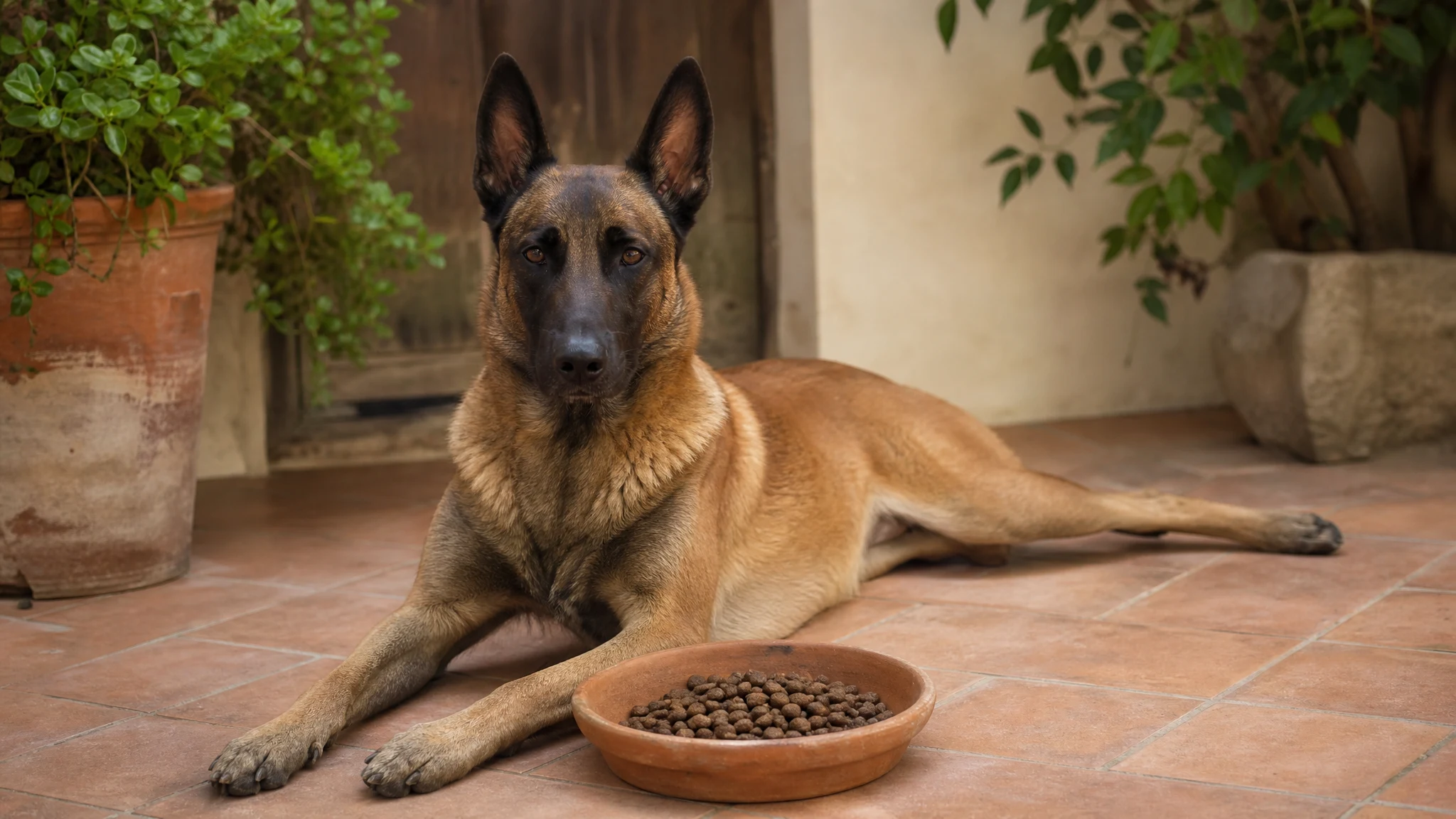
No bag of kibble can promise a calm gut. What you can do is read labels carefully and pick a food that fits your dog's age, size and tolerance. This guide shows how to do that for a Belgian Malinois, using label data from real brands.
We compared label data only. We did not run feeding trials or taste tests, and nothing here says a food prevents or treats any condition. If your dog has ongoing stomach or skin trouble, a veterinarian decides what to feed.
Why gut health is a label question for this breed
Hill's Pet notes that the Belgian Malinois can be at risk for allergies, with skin and/or gastrointestinal signs. That is a reason to pay attention to what goes in the bowl. It is not proof that any ingredient is good or bad for your dog.
The American Belgian Malinois Club standard puts males at 24 to 26 inches and females at 22 to 24 inches at the withers. Hill's lists adult weight at 40 to 80 pounds and a life expectancy of 12 to 15 years. Many adults weigh under 70 pounds, so a "large" food is a reasonable starting category, not a rule.
For a wider look at the breed, see our full label comparison of dog food for Belgian Malinois.
What you need
- The bag or the brand's own product page for each food you are considering
- Your dog's current weight and age
- A notebook or phone note for stool, appetite and itch observations
- A kitchen scale or a level measuring cup
- Your veterinarian's contact details for questions
Step 1: Match the life stage
Find the AAFCO statement on the label. It is usually a sentence near the guaranteed analysis. It tells you whether the food is for growth, maintenance or all life stages.
Puppies need extra care. The Whole Dog Journal explains that growth and all life stages foods must say either "including growth of large size dogs (70 lb or more as an adult)" or "except for growth of large size dogs." It also notes that too much calcium can cause bone and joint abnormalities in large-breed puppies.
Cornell University's Riney Canine Health Center advises feeding a large-breed formula to growing large dogs. It also says not to add calcium or vitamin D supplements to a growing puppy. Large breeds mature between about 15 months and two years, so ask your veterinarian when to switch to an adult food.
Step 2: Read the first five ingredients
The ingredient list is in order by weight. The first five show the main building blocks. Look for ingredients your dog has handled well before, and note any your dog has reacted to.
Be careful with marketing. "Grain free" is not a gut health claim, and a long list of extras does not tell you how a dog will respond. If your dog has a suspected food reaction, a veterinarian can guide an elimination plan. Do not guess.
Step 3: Compare protein, fat and calories fairly
Brands report nutrients in different ways. Royal Canin, Victor, Orijen and Freshpet list protein and fat figures on their pages. Hill's lists dry matter averages, which are not guaranteed minimums. Freshpet is a moist refrigerated food, so its percentages look small next to dry food. Use the table for a rough read, not a ranking.
| Food | Life stage per label | Protein / fat | Calories | First ingredients |
|---|---|---|---|---|
| Royal Canin Large Puppy (dry) | Growth, including large size dogs | 28% / 14% | 349 kcal per cup | Chicken by-product meal, corn, wheat, chicken fat, wheat gluten |
| Royal Canin Large Adult (dry) | Maintenance | 24% / 15% | 360 kcal per cup | Chicken by-product meal, brewers rice, wheat, brown rice, chicken fat |
| Royal Canin Large Aging 8+ (dry) | Maintenance, over 8 years | 25% / 15% | 308 kcal per cup | Chicken by-product meal, brewers rice, wheat, corn gluten meal, chicken fat |
| Hill's Science Diet Puppy Large Breed Chicken & Brown Rice (dry) | Growth, feeding-test statement | 26.7% / 15.4% (dry matter averages) | 387 kcal per cup | Chicken, brown rice, whole grain oats, chicken meal, cracked pearled barley |
| Hill's Science Diet Adult Large Breed Chicken & Barley (dry) | Maintenance, feeding-test statement | 23.8% / 15% (dry matter averages) | 365 kcal per cup | Chicken, cracked pearled barley, brown rice, brewers rice, whole grain wheat |
| Victor Hi-Pro Plus Large Breed Puppy (dry) | All life stages, including large size dogs | 30% / 14% | 365 kcal per cup | Chicken, chicken meal, brown rice, whole grain millet, whole grain sorghum |
| Orijen Original (dry) | All life stages, including large size dogs | 38% / 18% | 473 kcal per 8 oz cup | Chicken, turkey, salmon, whole herring, chicken liver |
| Freshpet Vital Chicken Recipe with Peas, Carrots & Brown Rice (fresh) | All life stages, including large size dogs | 9.5% / 7% (moisture up to 76%) | 309 kcal per 1/2 lb; no per-cup figure | Chicken, chicken liver, peas, carrots, chicken broth |
No brand we checked sells a Belgian Malinois specific formula. These are large-breed, large-size or all-breed foods. Kibble size was not given on most pages, so check with the brand.
Step 4: Think about calorie density and weight
A food with more calories per cup means a smaller portion. Orijen lists 473 kcal per cup, while Royal Canin Large Aging 8+ lists 308. Switching between them cup for cup would change your dog's intake a lot, and a sudden change in amount can upset a stomach.
Hill's notes that hip and elbow dysplasia can be common in the breed and that risk can increase with weight gain. It also says excess weight strains joints and suggests keeping treats to 10 percent of daily calories. Cornell adds that puppies predisposed to hip dysplasia should not be overfed or grown too fast.
Step 5: Use the feeding guide as a starting point
Each brand publishes a feeding guide. Treat it as a first estimate. For example, Royal Canin's Large Adult chart gives 3 cups plus 4/8 cup per day for a 62 pound dog with moderate activity. Hill's says to adjust amounts to maintain optimal weight and to ask your veterinarian if unsure. Royal Canin and Victor also point to calculators or charts by weight and age.
Check your dog's body condition every couple of weeks and adjust with your veterinarian's input.
Step 6: Set up meals to be gentle on the gut
Cornell says large, deep-chested dogs are most at risk of bloat (gastric dilatation volvulus). Its suggestions include two or more meals per day, smaller kibble, limited activity after meals and no raised bowls. Cornell's page does not name the Malinois, so ask your veterinarian how this applies to your dog. Orijen's page also advises feeding twice daily.
Step 7: Switch foods slowly and keep notes
Mix a little of the new food into the old, and raise the share over about a week or longer. Many veterinarians suggest this approach. Write down stool quality, appetite, itching and energy each day. If your dog has vomiting, diarrhea or blood in the stool, call your veterinarian rather than waiting.
Tips and common mistakes
- Judging by the front of the bag. Phrases like "digestive support" are not the same as the AAFCO statement. Read the statement.
- Comparing percentages across food types. Dry, dry matter and moist figures are not directly comparable.
- Skipping the puppy rule. A maintenance food is not a growth food. Check the statement for a puppy.
- Adding supplements to a growing puppy. Cornell advises against extra calcium or vitamin D.
- Changing two things at once. Change food or treats, not both, so you can tell what made a difference.
- Counting treats as free. Keep them to 10 percent of daily calories, per Hill's.
- Assuming a grain-free label is safer. The FDA's DCM investigation page says its latest update was December 23, 2022, and that it does not plan further public updates until there is meaningful new scientific information. Ask your veterinarian before choosing a diet for that reason.
- Using a food for medical purposes. Prescription diets are only something a veterinarian prescribes.
What to expect
A well-matched food and a slow switch may help your dog's stools stay consistent and appetite steady, though every dog responds differently. Changes can take a few weeks to show. Some dogs may do well on the first food, and others may need a different one.
If signs such as loose stool, frequent itching or vomiting continue, a veterinarian can look for the cause. A label cannot do that.
Probiotic or fiber content was not listed in the label data we compared. Check with each brand if that matters to you.
For Orijen, check the brand's own site for current label details, since we did not link a store page. Brand pages change, so confirm the figures before you buy.
Sources
- Hill's Pet, Belgian Malinois breed page
- American Belgian Malinois Club, Official Standard
- Cornell University Riney Canine Health Center, GDV (bloat)
- Cornell University Riney Canine Health Center, canine hip dysplasia
- Whole Dog Journal, In the Fine Print: Nutritional Adequacy Statements
- FDA Center for Veterinary Medicine, DCM investigation
- Royal Canin Large Puppy
- Royal Canin Large Adult
- Royal Canin Large Aging 8+
- Hill's Science Diet Puppy Large Breed
- Hill's Science Diet Adult Large Breed
- Victor Hi-Pro Plus Large Breed Puppy
- Freshpet Vital Chicken Recipe with Peas, Carrots & Brown Rice