Best Food for Senior Belgian Malinois
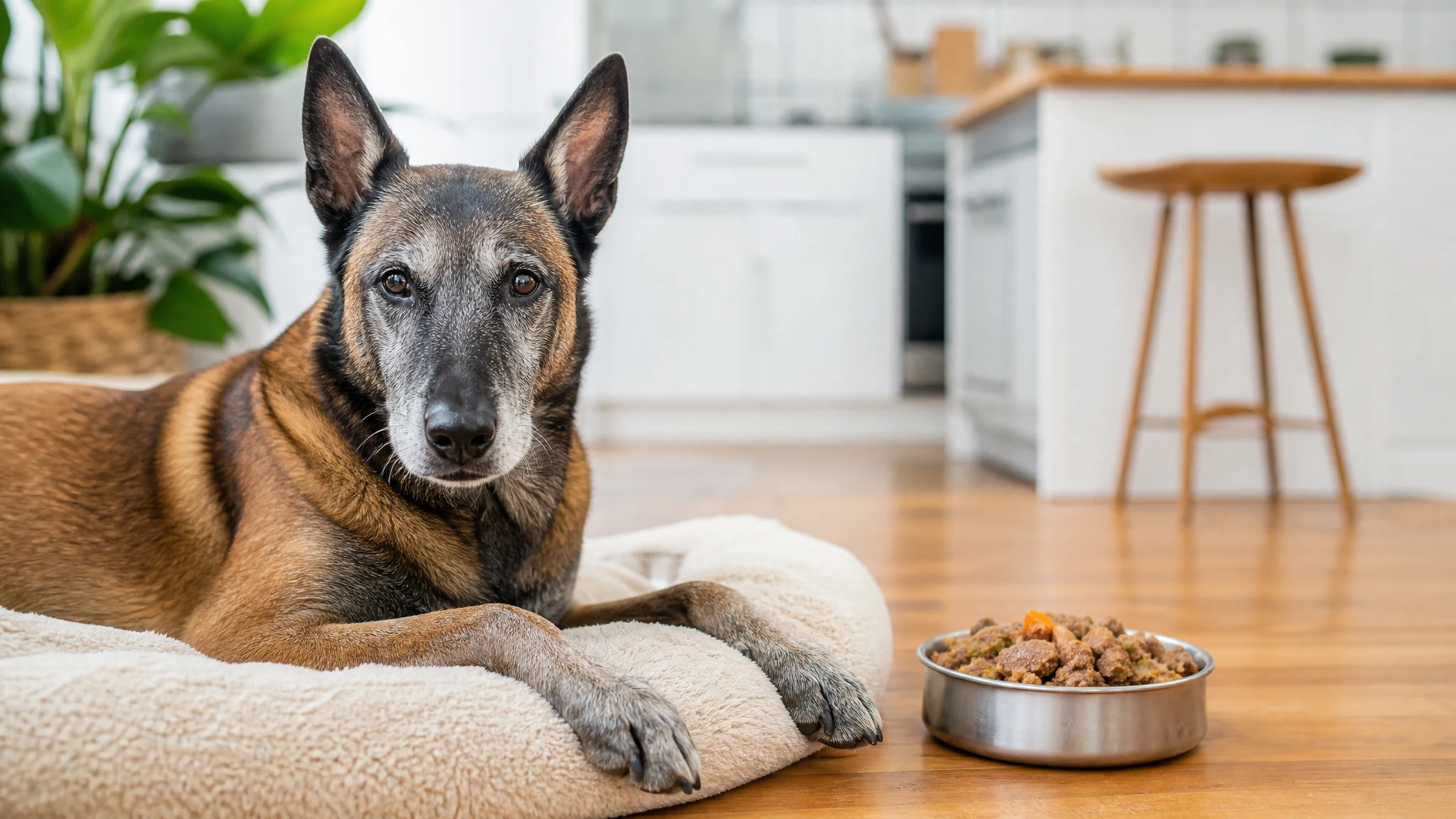
General nutrition information compiled from product labels and published sources, not veterinary advice. Your veterinarian is the right person to choose a diet for your dog, especially one with a health condition.
Most owners of an older Belgian Malinois want one thing from a bag of food: steady energy without extra weight. The Hill's Pet breed page gives a life expectancy of 12 to 15 years for the breed. That leaves a long stretch of years where food choices matter.
This guide covers how to read labels when choosing the best senior dog food for Belgian Malinois, which products fit an older dog, and what to be skeptical about. It is about product quality, not medical treatment. Your veterinarian decides what is right for your individual dog.
How we compared these foods
We compared label data published on each brand's own product page: the nutritional adequacy statement, the first five ingredients, the protein, fat and fiber figures, and calories. We did not run feeding trials or taste tests, and we have not fed any of these foods to dogs. Nothing here is a rating of how a food performs in a real dog.
No brand we found makes a formula just for Belgian Malinois. Every product below is a large-breed, adult or all-life-stages food.
What a senior Malinois actually needs from a label
Adult Belgian Malinois weigh 40 to 80 pounds, according to the Hill's Pet breed page, and males are usually heavier than females. The American Belgian Malinois Club standard gives height only: males 24 to 26 inches and females 22 to 24 inches at the withers. Hill's treats the breed as a large one, so large-breed adult and senior formulas are the natural place to start.
Many Malinois slow down in their later years, but the breed is built athletic and lean. The goal for most older dogs is to stay lean while getting complete nutrition. Four things on the label help with that.
1. The adequacy statement
Look for the AAFCO statement on the bag. It should say the food is complete and balanced, and for which life stage. Some foods back the claim by formulating to the AAFCO nutrient profiles. Others back it with animal feeding tests using AAFCO procedures. Both are legitimate, and the wording tells you which one the brand used.
The statements on the foods below say "maintenance" or "all life stages." None of them cites a separate senior profile. Royal Canin's "Aging 8+" food carries a maintenance statement, the same kind adult foods carry. "Senior" on a bag is a marketing and formulation choice by the brand, not a separate AAFCO category. That is useful to know when a front-of-bag claim sounds more official than it is.
2. Calories per cup
Calories are often the biggest difference between a food that suits a slowing dog and one that does not. Hill's notes that excess weight adds strain on joints, and says hip and elbow dysplasia can be common in the breed, with risk that can rise with weight gain. A food that is calorie dense is fine for a working dog and easy to overfeed to a retired one.
Hill's also advises keeping treats to 10 percent of daily calories. For an older dog, that treat budget counts.
3. The first five ingredients
The first five ingredients show you what the recipe is mostly made of. Compare them as a pattern. A named animal protein near the top is a good sign. Brewers rice, wheat or corn gluten near the top tells you the recipe leans on grains and by-products. That is not automatically bad, but it is worth seeing.
4. Protein, fat and fiber, read carefully
These numbers are not always comparable. Royal Canin and Victor list guaranteed analysis figures. Hill's lists average nutrient content on a dry matter basis, which is not a guaranteed minimum. A dry matter figure runs higher than an as-fed figure for the same food, so never set the two side by side as if they were equal.
Label comparison
| Food | Adequacy statement | First five ingredients | Calories |
|---|---|---|---|
| Royal Canin Large Aging 8+ (dry) | Maintenance | Chicken by-product meal, brewers rice, wheat, corn gluten meal, chicken fat | 308 kcal ME per cup, as fed (calculated) |
| Royal Canin Large Adult (dry) | Maintenance | Chicken by-product meal, brewers rice, wheat, brown rice, chicken fat | 360 kcal ME per cup, as fed (calculated) |
| Hill's Science Diet Adult Large Breed Chicken & Barley (dry) | Maintenance, by AAFCO feeding tests | Chicken, cracked pearled barley, brown rice, brewers rice, whole grain wheat | 365 kcal per cup |
| Victor Hi-Pro Plus Large Breed Puppy (dry) | All life stages, including growth of large dogs | Chicken, chicken meal, brown rice, whole grain millet, whole grain sorghum | 365 kcal per cup |
| Orijen Original (dry) | All life stages, including growth of large dogs | Chicken, turkey, salmon, whole herring, chicken liver | 473 kcal per 8 oz cup |
| Freshpet Vital Chicken Recipe (fresh) | All life stages, including growth of large dogs | Chicken, chicken liver, peas, carrots, chicken broth | 309 kcal per 1/2 lb; no per-cup figure published |
Our picks by type of dog and kitchen
We do not list prices. Prices change often and vary by seller, and we cannot verify them. So instead of price tiers, the picks below are grouped by format and calorie level. Check each brand's page for current options and costs.
Made for the older large dog: Royal Canin Large Aging 8+
This is the only food in this comparison labeled for dogs over 8 years old. Royal Canin's page describes it for large breeds of 56 to 100 pounds. At 308 kcal per cup it is the lowest-calorie dry food here, which can suit a Malinois who has slowed down. Its protein is 25 percent minimum, fat 15 percent minimum and fiber 4.3 percent maximum.
The first ingredient is chicken by-product meal, followed by brewers rice and wheat. If you prefer a whole-meat first ingredient, this will not be your pick. The brand's page offers a feeding calculator for a tailored amount, found on the Royal Canin product page.
Mainstream large-breed adult foods: Hill's and Royal Canin
Hill's Science Diet Adult Large Breed Chicken & Barley lists chicken first, with barley and rice behind it. Its adequacy statement rests on AAFCO feeding tests. Hill's dry matter averages are 23.8 percent protein and 15 percent fat. See the Hill's product page.
Royal Canin Large Adult is a similar choice. Its page shows a daily chart by weight and activity, with an example of 3 cups plus 4/8 cup for a 62 pound dog at moderate activity. Treat that as a starting point only. It is on the Royal Canin Large Adult page. Royal Canin states this food is for dogs over 15 months old, so it is also an option for a younger adult.
Higher-protein, higher-calorie options: Victor and Orijen
Both of these are labeled for all life stages, not for older dogs. They are also more calorie dense. Victor Hi-Pro Plus Large Breed Puppy lists 30 percent protein minimum and 365 kcal per cup. Orijen Original lists 38 percent protein minimum and 473 kcal per cup.
A Malinois who is still active and lean may do well on them. A slower dog on a calorie-dense food needs careful portioning. Victor's page includes a cups-per-day chart and says to feed to maintain good body condition after age one. See the Victor product page. We cannot link a brand page for Orijen from our research, so look it up on the brand's own site.
Note that Victor's recipe name says "puppy," even though its statement covers all life stages. Ask your veterinarian whether it fits your dog.
Fresh food: Freshpet Vital Chicken Recipe
This is a refrigerated roll. Its label shows chicken first, then chicken liver, peas and carrots. Protein is 9.5 percent minimum and fat 7 percent minimum, with moisture up to 76 percent. Those numbers are low compared with dry foods only because of the water. Do not compare them directly with kibble.
The brand says to slice off the amount shown on the package marks and use the roll within 7 days of opening. See the Freshpet product page.
Canned food as a topper: Hill's Adult Chicken & Barley Entree
Hill's lists this canned food for adult dogs aged 1 to 6, and not for puppies. It is not labeled for older dogs, so ask your veterinarian before using it as a main meal. It carries 369 kcal per 13 oz can, which is per can, not per cup. See the Hill's canned entree page.
Features worth comparing, beyond the label basics
Meal size and kibble size
Cornell University's Riney Canine Health Center says large, deep-chested dogs are most at risk of bloat, also called GDV. Its page does not name the Malinois, and a breed-specific risk is not confirmed. Cornell suggests two or more meals a day, smaller kibble, limited activity after meals and no raised bowls. Kibble size is not published on the pages we reviewed, so ask the brand if it matters to you.
Skin and stomach sensitivity
Hill's says the breed can be at risk for allergies with skin or gastrointestinal signs. If your dog has either, a food change should be a conversation with your veterinarian, not a guess from a label. Changing foods too fast can upset any dog's stomach, so switch gradually.
Grain-free
None of the foods above except Orijen has an unclear grain status in our research. On grain-free foods, the FDA's Center for Veterinary Medicine has an ongoing page on a possible link between certain diets and canine dilated cardiomyopathy (DCM). Its latest update is dated December 23, 2022, and the agency says it does not plan more public updates until there is meaningful new scientific information. If you are weighing a grain-free diet, bring it up with your veterinarian.
Red flags to avoid
- Disease claims. A food that says it prevents or treats hip dysplasia, allergies or heart disease is making a medical claim. Only a veterinarian prescribes a therapeutic diet.
- No adequacy statement. If you cannot find "complete and balanced" and a life stage, move on.
- "Senior" with no explanation. The word alone tells you little. Read the calories and the statement.
- Vague ingredient names. Look for named proteins rather than generic terms.
- Puppy-only statements. A food "for growth" only is not complete for an adult. All-life-stages foods are fine if the calories suit your dog.
- Calorie density that ignores your dog's activity. Check calories per cup before you buy.
- Supplement add-ons for puppies or seniors. Do not add supplements to a diet without veterinary advice.
Feeding amounts, weight and checkups
Every feeding chart is a starting point. Brand charts assume an average dog. Hill's says to adjust amounts as necessary to maintain optimal weight, and to ask your veterinarian if you are unsure. Weigh your dog on a schedule, feel the ribs, and adjust the portion if the body condition drifts.
Regular veterinary checkups matter more as dogs age. Your veterinarian can score body condition, review the food, check the mouth and joints, and tell you whether any change is needed. Hill's flags joint strain from extra weight in this breed, so a lean dog is worth protecting. Our research did not turn up breed-specific dental guidance. If a dog chews slowly or drops food, raise it with your veterinarian before changing the kibble.
Where to buy
Start with the brand's own website. Each brand page lists the formula name, adequacy statement and ingredients, so you can check that the bag in your hands matches what you read. Use the exact product name, since brands often sell several similar formulas.
Your veterinarian's office can also tell you what is available locally. Whoever you buy from, check the bag's printed statement and ingredient list when you open it. Prices are not covered here, so compare sellers yourself.
Key takeaways
- There is no separate AAFCO senior profile on these labels. Read the adequacy statement and the calories.
- Royal Canin Large Aging 8+ is the only food here labeled for older large dogs, and the lowest in calories.
- Large-breed adult foods from Hill's and Royal Canin are mainstream options.
- Higher-calorie foods suit active dogs and need careful portions for slower ones.
- Your veterinarian makes the final call for your individual dog.
Sources
- Hill's Pet, Belgian Malinois breed page
- American Belgian Malinois Club, Official Standard
- Cornell University Riney Canine Health Center, GDV (bloat)
- FDA Center for Veterinary Medicine, DCM investigation
- Whole Dog Journal, In the Fine Print: Nutritional Adequacy Statements
- Royal Canin, Large Aging 8+
- Hill's Science Diet, Adult Large Breed
- Victor, Hi-Pro Plus Large Breed Puppy
- Freshpet, Vital Chicken Recipe