Choosing a Dog Feeding Station: A Buying Guide for Active Breeds
General nutrition information compiled from product labels and published sources, not veterinary advice. Your veterinarian is the right person to choose a diet for your dog, especially one with a health condition.
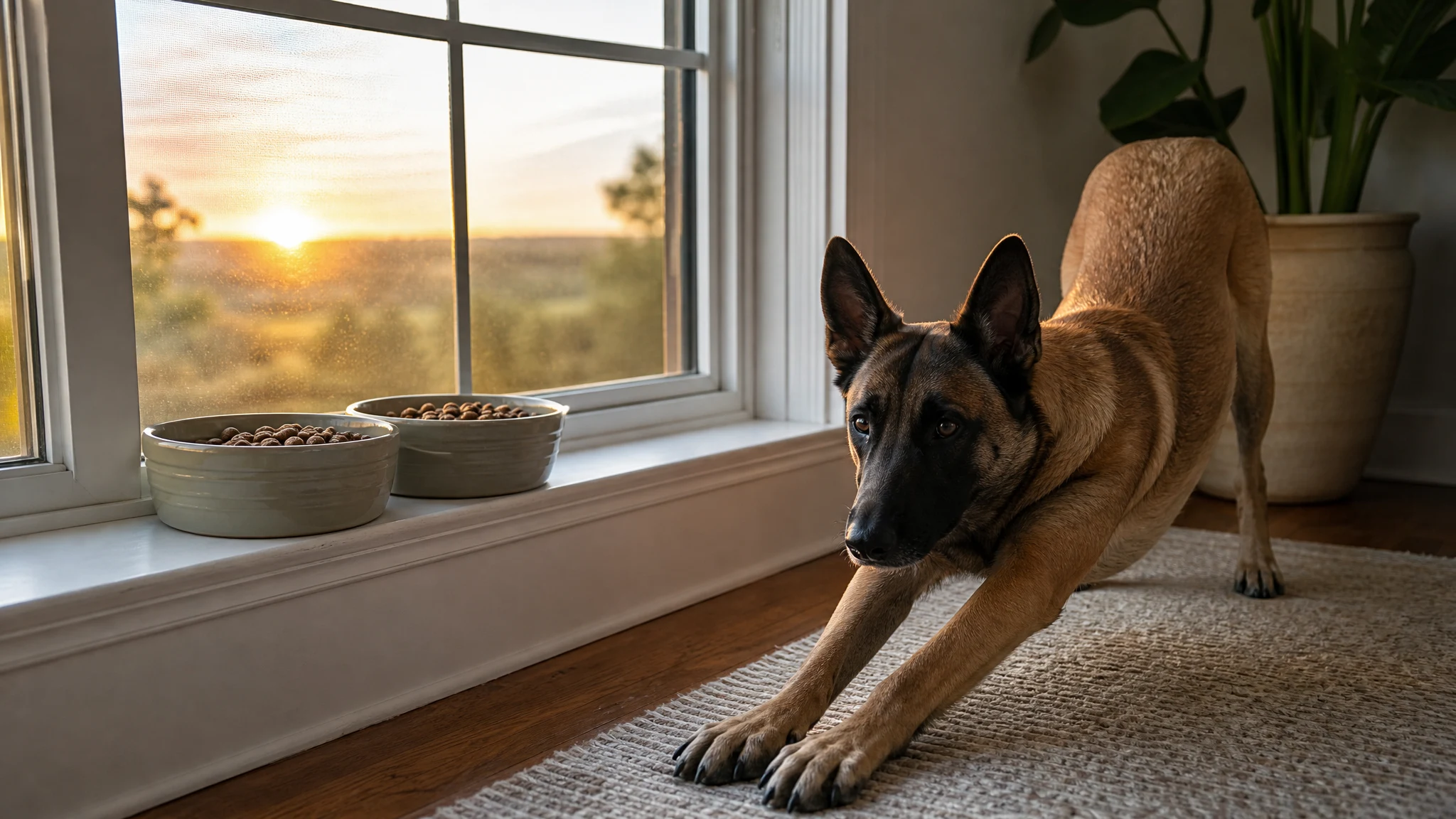
A dog feeding station is the spot where your dog eats and drinks. It usually means bowls, a mat, and sometimes a stand or storage for food. For a Belgian Malinois, the setup matters more than it might for a couch-loving breed. This is a fast, athletic dog that can inhale a meal in under a minute.
This guide walks you through choosing and setting up a feeding station, then shows how to check the food that goes in the bowl. Nothing here replaces your veterinarian, who decides what is right for an individual dog.
Why the Belgian Malinois needs a deliberate setup
The American Belgian Malinois Club standard lists males at 24 to 26 inches and females at 22 to 24 inches at the withers. Hill's Pet describes the adult weight as 40 to 80 pounds, with males usually heavier than females. That is a tall, lean, large dog, so a tiny bowl on the floor is rarely a good fit.
Two other points shape the setup. Cornell University's Riney Canine Health Center says large, deep-chested dogs are most at risk of gastric dilatation-volvulus (GDV, or bloat). Cornell does not name the Malinois on that page, and breed-specific risk is not confirmed there. Its general suggestions are useful anyway: two or more meals per day, smaller kibble, limited activity after meals, and no raised bowls.
Hill's also notes that excess weight strains joints, and that hip and elbow dysplasia can be common in the breed. A feeding station can make portions easier to measure, which helps keep weight steady.
What you need
- Two bowls, one for food and one for water. Stainless steel or ceramic are common choices because they wipe clean easily.
- A non-slip mat or tray to catch spills and keep bowls from sliding.
- A measuring cup or a kitchen scale for portions.
- An airtight container for dry food, kept in a cool, dry place.
- A slow feeder bowl or a lick mat, if your dog gulps. Optional.
- A tape measure, to measure your dog at the shoulder.
- The food bag or can, so you can read the label.
Step 1: Measure your dog and decide on bowl size
Measure from the floor to the top of the shoulder blades. Compare it with the club's figures above. This tells you whether you have a lean female near 22 inches or a tall male near 26.
Pick a food bowl wide enough that the whole muzzle fits comfortably. Pick a water bowl large enough that you are not refilling it constantly. Active dogs often drink a lot after exercise.
Step 2: Choose floor level, not raised
Raised bowls look tidy and are marketed to large breeds. Cornell's GDV page, however, lists "no raised bowls" among its suggestions for dogs at risk. Unless your veterinarian tells you otherwise for a specific reason, a floor-level setup is the safer default to start with.
If your dog has a mobility problem, talk to your veterinarian before choosing any height.
Step 3: Match the bowl to how fast your dog eats
Watch one normal meal. If the bowl is empty in seconds, consider a slow feeder with ridges or a divided design. Make sure it is sturdy enough for a strong dog, and that it is not so frustrating that your dog flips it.
Cornell's guidance on smaller kibble is another reason to read the product page. Many brands do not publish a kibble measurement, so check with the brand if size matters to you.
Step 4: Pick the surface and the spot
Put the station on a washable floor, away from the busiest doorway. Choose a mat with a raised lip. Wash the mat and bowls regularly with warm soapy water, since leftover food residue builds up quickly.
Keep the station in a calm place. A dog that eats in a hurry because of household bustle may gulp more.
Step 5: Set up storage and measuring
Keep the food scoop or cup next to the container so portions are consistent. Many brands print a feeding guide on the bag. Treat those amounts as starting points, then adjust with your veterinarian based on body condition and activity.
Hill's advises keeping treats to 10 percent of daily calories. A small treat jar beside the station, with a limit in mind, helps you keep to that.
Step 6: Plan meals and quiet time
Split the daily amount into at least two meals, following Cornell's suggestion. Then give your dog a rest period after eating, because Cornell lists limited activity after meals among its recommendations for at-risk dogs. For a high-drive Malinois, that means no hard fetch or running right after the bowl is empty.
Fresh water should always be available. Refill and rinse the bowl daily.
Step 7: Check the label on what goes in the bowl
The station is only half the picture. We compared label data from brand pages. We did not run feeding trials or taste tests, and nothing below is a recommendation or a rating. No brand lists a Belgian Malinois formula, so these are large-breed or all-life-stage products.
The AAFCO statement is the first thing to read. Whole Dog Journal explains that growth and all-life-stages foods must say either "including growth of large size dogs (70 lb or more as an adult)" or "except for growth of large size dogs." Many adult Malinois weigh under 70 pounds, so that wording is about the food's nutrient levels for puppies, not a statement that your dog will reach that size. Cornell also advises against adding calcium or vitamin D supplements to a growing puppy.
| Product | AAFCO statement (summary) | Protein / fat | Calories | First ingredients |
|---|---|---|---|---|
| Royal Canin Large Puppy Dry | Growth, including large size dogs | 28% / 14% (min) | 349 kcal ME per cup | Chicken by-product meal, corn, wheat |
| Royal Canin Large Adult Dry | Maintenance | 24% / 15% (min) | 360 kcal ME per cup | Chicken by-product meal, brewers rice, wheat |
| Hill's Science Diet Puppy Large Breed Chicken & Brown Rice | Growth, by AAFCO feeding tests | 26.7% / 15.4% (dry matter averages) | 387 kcal per cup | Chicken, brown rice, whole grain oats |
| Hill's Science Diet Adult Large Breed Chicken & Barley | Maintenance, by AAFCO feeding tests | 23.8% / 15% (dry matter averages) | 365 kcal per cup | Chicken, cracked pearled barley, brown rice |
| Victor Hi-Pro Plus Large Breed Puppy | All life stages, including large size dogs | 30% / 14% (min) | 365 kcal per cup | Chicken, chicken meal, brown rice |
| Orijen Original Dry | All life stages, including large size dogs | 38% / 18% (min) | 473 kcal per 8 oz cup | Chicken, turkey, salmon |
| Freshpet Vital Chicken Recipe | All life stages, including large size dogs | 9.5% / 7% (min; high moisture) | 309 kcal per 1/2 lb | Chicken, chicken liver, peas |
Hill's figures are averages on a dry matter basis, not guaranteed minimums, so they are not directly comparable with the other rows. Freshpet is a refrigerated roll with up to 76 percent moisture, so its percentages look low. Calories per cup also vary a lot, which changes how much fits in the bowl.
For a fuller side-by-side, see our label comparison of foods for Belgian Malinois.
Common mistakes to avoid
- Buying on looks. Elevated, decorative stands may cause more trouble than they solve for a deep-chested dog.
- Using a bowl that slides. A strong, excited dog will push a light bowl across the room.
- Free-feeding. Leaving food out all day makes it harder to see how much your dog eats and to keep weight steady.
- Heavy exercise right after meals. Plan the day so the bowl is not followed straight by a run.
- Copying a bag's amount without checking. Label guides are starting points. Adjust with your veterinarian.
- Switching foods suddenly. Ask your veterinarian how to change foods, especially if your dog has a sensitive stomach or skin. Hill's notes the breed can be at risk for allergies with skin or gastrointestinal signs.
- Adding supplements to a puppy's bowl. Cornell advises against extra calcium or vitamin D for growing large-breed puppies.
What to expect
A well-chosen feeding station may make mealtimes calmer and cleaner, and it can make portions easier to measure. It may also help you notice changes in appetite sooner. Results vary by dog, and a station cannot prevent or treat any health condition.
If your dog vomits, retches, has a swollen belly, or seems in distress after eating, call your veterinarian right away. For puppies, Hill's labels its large breed puppy food for up to 18 months. Royal Canin's general guidance says large breeds mature between about 15 months and two years. Ask your veterinarian when to move to an adult food.
Sources
- Cornell University Riney Canine Health Center: GDV or bloat
- Cornell University Riney Canine Health Center: canine hip dysplasia
- Hill's Pet: Belgian Malinois breed page
- American Belgian Malinois Club: Official Standard
- Whole Dog Journal: In the Fine Print: Nutritional Adequacy Statements
- Royal Canin Large Puppy
- Royal Canin Large Adult
- Hill's Science Diet Puppy Large Breed
- Hill's Science Diet Adult Large Breed
- Victor Hi-Pro Plus Large Breed Puppy
- Freshpet Vital Chicken Recipe