Wellness Complete Health Dog Food: How It Compares on the Label
General nutrition information compiled from product labels and published sources, not veterinary advice. Your veterinarian is the right person to choose a diet for your dog, especially one with a health condition.
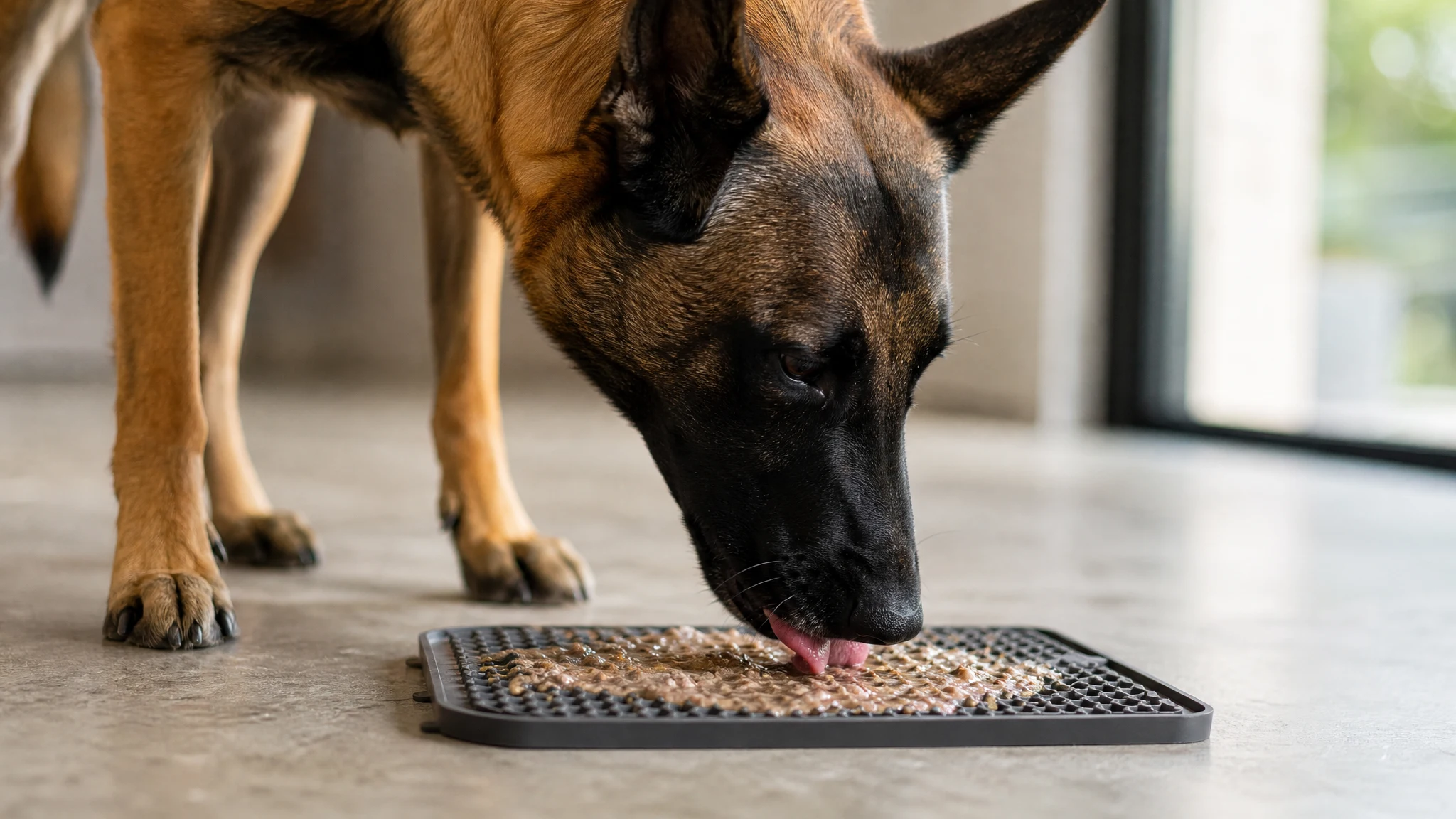
If you feed a Belgian Malinois, you have probably stood in front of a bag of Wellness Complete Health dog food and wondered how it stacks up. This guide shows you how to answer that yourself, one label line at a time.
We compared label data only. We did not run feeding trials or taste tests, and nothing here says one food is better for your dog. Wellness Complete Health label numbers are not reproduced below. You will pull them from the Wellness product page or the bag, then set them beside the foods in the table.
Why the label matters for a Malinois
Hill's Pet describes the Belgian Malinois as a large breed, typically 40 to 80 pounds, with males usually heavier than females. The American Belgian Malinois Club standard gives height at the withers: males 24 to 26 inches, females 22 to 24 inches. Hill's lists a life expectancy of 12 to 15 years.
Hill's also advises large-breed puppy food for this breed, and says hip and elbow dysplasia can be common and that risk can rise with weight gain. A food label cannot tell you whether a diet will protect your dog. It can tell you what the maker states the food is built for. That is what we compare.
Materials you need
- The Wellness Complete Health bag or the product page from Wellness itself, for the exact recipe you are considering.
- One or two other foods to compare, as bags or brand pages.
- Your dog's age, current weight and body condition, ideally from your veterinarian's last visit.
- A notepad or spreadsheet with columns for the items in the steps below.
- A calculator for the calorie math.
Step-by-step: compare the label
Step 1: Find the AAFCO nutritional adequacy statement
This is a sentence, usually near the guaranteed analysis, that says what life stage the food is formulated for. Copy it word for word. Without this statement, you cannot tell whether a food is meant to be a complete diet.
Two wordings matter. "Formulated to meet" means the recipe matches the AAFCO nutrient profile on paper. "Animal feeding tests using AAFCO procedures substantiate" means the maker ran a feeding test. Hill's Science Diet uses the second wording on its large-breed puppy and adult dry foods. Royal Canin, Victor, Orijen and Freshpet use the first on the products listed below.
Step 2: Match the life stage to your dog
Check whether the statement says growth, maintenance, or all life stages. A Malinois puppy needs a growth or all-life-stages food. An adult can eat a maintenance food.
Large and giant breeds mature between about 15 months and two years, according to Royal Canin's general large-breed guidance. Hill's labels its large-breed puppy food for puppies up to 18 months. Ask your veterinarian when to switch your own dog.
Step 3: Read the large-size growth wording for puppies
Whole Dog Journal explains that growth and all-life-stages foods must say either "including growth of large size dogs (70 lb or more as an adult)" or "except for growth of large size dogs." The same article notes that too much calcium can cause bone and joint abnormalities in large-breed puppies.
Many adult Malinois weigh under 70 pounds, so the 70 pound wording is a nutrient-level class, not a statement about your dog's expected size. Still, for a puppy, you want the "including" version or a food labeled for large-breed puppies.
Cornell's Riney Canine Health Center also advises against adding calcium or vitamin D supplements to a growing large-breed puppy, and against overfeeding or rapid growth in puppies predisposed to hip dysplasia.
Step 4: Write down the first five ingredients
Ingredients are listed by weight before cooking, so the first few tell you the main building blocks. Note whether the first item is a named meat, a meat meal, or a grain. A "by-product meal" is not automatically bad or good. It is simply a different ingredient from whole chicken, so record it as listed.
Do not read a grain-free label as a health claim. The FDA's DCM investigation page says its latest update is dated December 23, 2022, and that it does not plan further public updates without meaningful new scientific information. If you have questions about grains and heart health, ask your veterinarian.
Step 5: Compare protein, fat and fiber on the same basis
This is the step people most often get wrong. A bag's guaranteed analysis gives minimums or maximums on an as-fed basis. Hill's product pages list averages on a dry matter basis instead. Those numbers are not directly comparable. Write down which basis each number uses, and do not rank foods on mismatched figures.
Step 6: Convert calories to a common unit
Calories decide how much you feed, and a dense food can be easy to overfeed. Record kcal per cup where the brand gives it. Fresh and canned foods are often listed per can or per pound instead, so note the unit and do not force a comparison.
Step 7: Use the feeding guide as a starting point
Brand charts are starting points. Hill's says to adjust amounts to maintain optimal weight and to ask your veterinarian if unsure. Hill's also advises keeping treats to 10 percent of daily calories, because excess weight adds strain on joints.
For a deep-chested dog, Cornell suggests two or more meals a day, smaller kibble, limited activity after meals and no raised bowls to lower bloat risk. Cornell's page does not name the Malinois, and breed-specific bloat risk is not confirmed there, so treat this as general large-dog guidance.
Label data for comparison foods
These are from each brand's own product page. Protein, fat and fiber are shown as the brand lists them. Hill's figures are dry matter averages, not guaranteed minimums. Kibble size is not given on most pages, so check the brand.
| Food | AAFCO life stage | Protein / fat | Calories | First ingredients |
|---|---|---|---|---|
| Royal Canin Large Puppy (dry) | Growth, including large size dogs | 28% / 14% min | 349 kcal per cup | Chicken by-product meal, corn, wheat |
| Royal Canin Large Adult (dry) | Maintenance | 24% / 15% min | 360 kcal per cup | Chicken by-product meal, brewers rice, wheat |
| Royal Canin Large Aging 8+ (dry) | Maintenance | 25% / 15% min | 308 kcal per cup | Chicken by-product meal, brewers rice, wheat |
| Hill's Science Diet Puppy Large Breed (dry) | Growth, feeding-test substantiated | 26.7% / 15.4% (dry matter avg.) | 387 kcal per cup | Chicken, brown rice, whole grain oats |
| Hill's Science Diet Adult Large Breed (dry) | Maintenance, feeding-test substantiated | 23.8% / 15% (dry matter avg.) | 365 kcal per cup | Chicken, cracked pearled barley, brown rice |
| Victor Hi-Pro Plus Large Breed Puppy (dry) | All life stages, including large size dogs | 30% / 14% min | 365 kcal per cup | Chicken, chicken meal, brown rice |
| Orijen Original (dry) | All life stages, including large size dogs | 38% / 18% min | 473 kcal per 8 oz cup | Chicken, turkey, salmon |
| Freshpet Vital Chicken Recipe (fresh) | All life stages, including large size dogs | 9.5% / 7% min (high moisture) | 309 kcal per 1/2 lb | Chicken, chicken liver, peas |
Add a row for the Wellness Complete Health recipe you are considering, using only what Wellness prints on its own page or bag. If the page does not give a number, the brand is the place to ask. Do not fill in a guess.
For a wider look at large-breed options, see our label comparison of foods for Belgian Malinois.
Tips
- Compare like with like: puppy to puppy, adult to adult, dry to dry.
- Change foods gradually and watch stool and appetite. Hill's notes the breed can be at risk for allergies with skin or gastrointestinal signs, so tell your veterinarian about any changes.
- Re-check body condition every few weeks and adjust the portion, not just the brand.
- Keep the label or a photo of it. Recipes can change.
Common mistakes to avoid
- Comparing percentages across bases. Dry matter averages and as-fed minimums are different measures.
- Judging a food by its front-of-bag claims. Words like "complete health" are brand names and marketing, not a nutrient standard. The AAFCO statement is the line to read.
- Feeding an adult maintenance food to a growing puppy. Check the life stage first.
- Adding calcium to a puppy's food. Cornell advises against it for growing large breeds.
- Treating a high-protein or grain-free label as proof of quality. It is one data point.
- Using the bag chart as a fixed amount. Active working-type dogs and calm pets can need very different portions.
What to expect
Done carefully, this method should give you a side-by-side view of what each maker states about its food, which may make your choice easier to explain to your veterinarian. It will not tell you how your dog will do on a food, how it tastes, or whether it suits an individual dog's health needs. No label can promise that.
A veterinarian decides what is right for an individual dog. Prescription diets are only something a veterinarian prescribes. Bring your finished comparison to your next visit and ask for a view on your dog's weight, life stage and portion.
Sources
- Hill's Pet, Belgian Malinois breed page
- American Belgian Malinois Club, Official Standard
- Cornell University Riney Canine Health Center, canine hip dysplasia
- Cornell University Riney Canine Health Center, GDV or bloat
- Whole Dog Journal, In the Fine Print: Nutritional Adequacy Statements
- FDA Center for Veterinary Medicine, DCM investigation
- Royal Canin Large Puppy
- Royal Canin Large Adult
- Royal Canin Large Aging 8+
- Hill's Science Diet Puppy Large Breed
- Hill's Science Diet Adult Large Breed
- Victor Hi-Pro Plus Large Breed Puppy
- Freshpet Vital Chicken Recipe