Dog Feeding Station Setup: What Belgian Malinois Owners Should Know
General nutrition information compiled from product labels and published sources, not veterinary advice. Your veterinarian is the right person to choose a diet for your dog, especially one with a health condition.
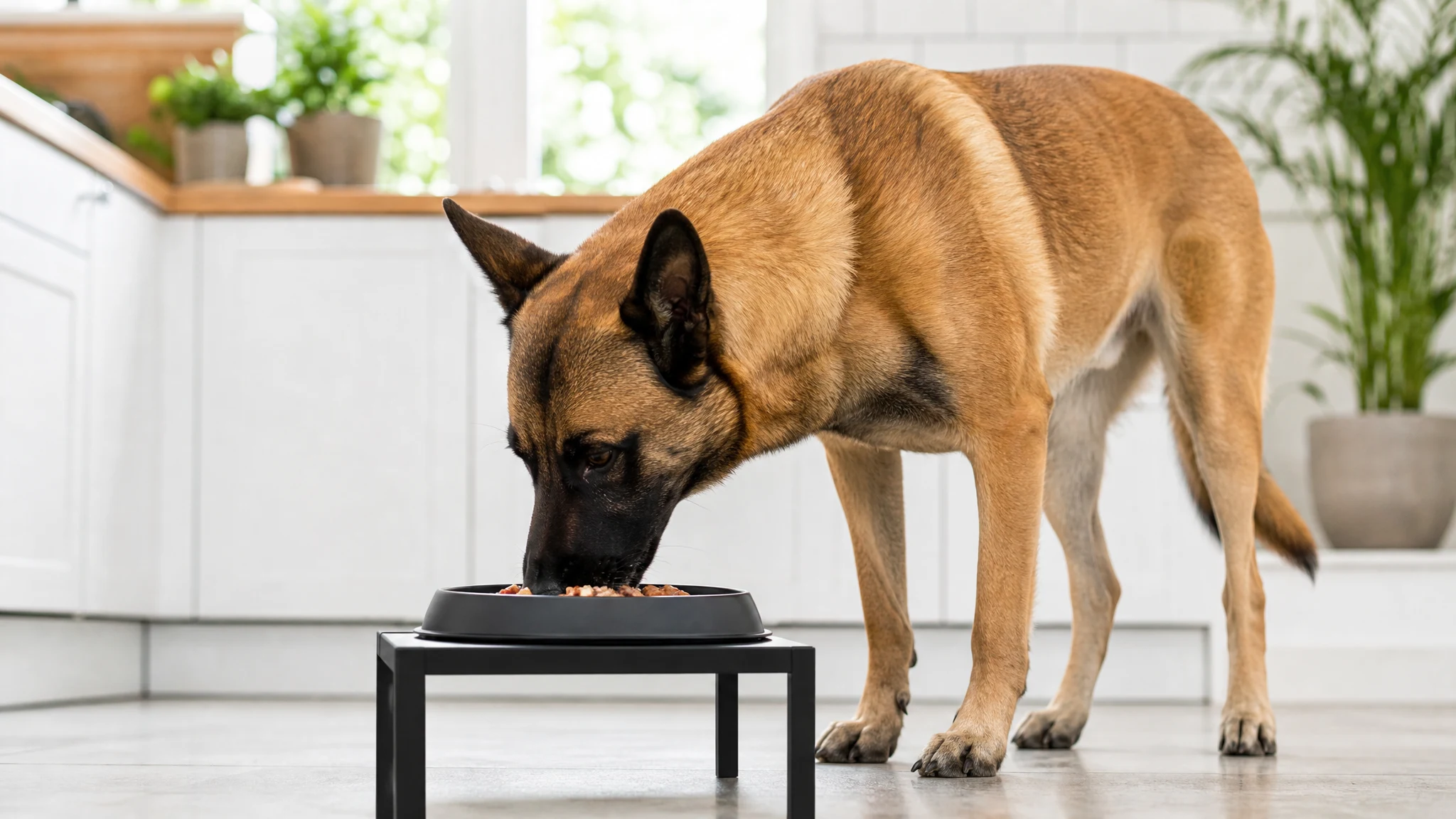
A dog feeding station is just a set spot, a few simple tools and a routine. For a Belgian Malinois, it also gives you a way to measure food, control treats and keep meals calm.
This guide walks through the setup step by step. It stays with what the sources say about the breed, and it points you to your own dog's food label and your veterinarian for exact amounts.
Why the setup matters for this breed
The American Belgian Malinois Club standard describes males at 24 to 26 inches and females at 22 to 24 inches at the withers. Hill's Pet lists adult weight at 40 to 80 pounds, with males usually heavier than females. That is a large, athletic dog, so portions and bowl size are not an afterthought.
Hill's Pet also notes that hip and elbow dysplasia can be common in the breed and that risk can increase with weight gain. It adds that extra weight strains the joints. A measured, consistent feeding routine is one practical way to keep an eye on body weight. It does not replace veterinary care.
Materials you will need
- A stable, non-tipping bowl sized for a large dog (stainless steel or ceramic are common choices).
- A separate water bowl, kept filled with fresh water.
- A washable, non-slip mat to catch spills and keep the bowl from sliding.
- A dry measuring cup, or a kitchen scale if you prefer weighing portions.
- An airtight container for dry food, or fridge space if you feed a refrigerated or canned food.
- A small treat jar, so treats are counted and not guessed.
- A notebook or phone note to record portions, weight checks and any changes.
Step-by-step setup
1. Pick a quiet, fixed spot
Choose a low-traffic corner of the kitchen or utility room. Avoid doorways and spots where kids or other pets walk through. A Malinois that eats in peace is easier to read, and you will notice sooner if appetite changes.
Keep the spot the same every day. Dogs settle faster when the place and routine do not change.
2. Place the bowls at floor level
Cornell University's Riney Canine Health Center page on gastric dilatation-volvulus (GDV, or bloat) says large, deep-chested dogs are most at risk. Among its suggestions, it advises against raised bowls. Cornell's page does not name the Malinois, and breed-specific GDV risk is not confirmed there. Ask your veterinarian whether the guidance applies to your dog.
Set the bowls directly on the mat. Keep the water bowl a few feet away so spills do not soak the food area.
3. Choose a food that matches your dog's life stage
Check the nutritional adequacy statement on the bag. Growth and all-life-stages foods must say either "including growth of large size dogs (70 lb or more as an adult)" or "except for growth of large size dogs," according to Whole Dog Journal's explanation of the AAFCO rules. The same article notes that too much calcium can cause bone and joint abnormalities in large-breed puppies.
Many adult Malinois weigh under 70 pounds, so that wording is a label clue and not a rule about your dog's size. For puppies, look for a large-breed puppy formula. Cornell's hip dysplasia page also says not to add calcium or vitamin D supplements to a growing puppy.
To see how specific products compare on label data, read our label comparison of dog foods for Belgian Malinois. We compared label data only. We did not run feeding trials or taste tests.
4. Find a starting amount from the label
Every feeding guide is a starting point, not a prescription. Amounts depend on your dog's weight, age and activity level.
- Weight: Use your dog's current weight, not an ideal one, then adjust after checking body condition.
- Age: Royal Canin's large puppy food covers puppies up to 15 months. Hill's large breed puppy food is labeled for puppies up to 18 months. Both cover the window in which large breeds mature, which Royal Canin's general guidance puts at 15 months to two years.
- Activity: Royal Canin's large adult chart is organized by weight and activity. Its example is a 62 pound dog with moderate activity at 3 cups plus 4/8 cup per day. That is one brand's example, and other foods differ.
Calorie density varies a lot between foods. The Royal Canin large adult formula lists 360 kcal per cup. The Hill's Science Diet Adult Large Breed formula lists 365 kcal per cup. Victor's Hi-Pro Plus Large Breed Puppy lists 365 kcal per cup. Orijen Original lists 473 kcal per 8 oz cup. Freshpet's chicken recipe publishes no per-cup figure. A cup of one food is not a cup of another, so always measure against the label of the food in your bowl.
If your dog has a health condition, confirm amounts with your veterinarian before you settle on a portion.
5. Set a meal schedule
Cornell's GDV page suggests feeding two or more meals per day for at-risk dogs. Splitting the daily amount into two meals is a reasonable default for most large dogs, and the Orijen label also says to feed twice daily. Feed at the same times each day.
Cornell also suggests limiting activity after meals. Plan a calm period after eating. Save hard training, fetch or running for before the meal, or for a good while after it.
6. Measure every meal
Level the cup or weigh the portion each time. Scooping by eye is the most common way portions creep up. Write the measured amount on a note near the food container so everyone in the house uses the same number.
7. Count the treats
Hill's Pet advises keeping treats to 10 percent of daily calories. A Malinois in training can collect a lot of rewards in a day. Pull training treats from the daily allowance, or reduce the meal slightly to make room. Reward-based training fits well here, since food is a useful reward.
8. Teach a calm routine
Ask for a sit or a settle before you lower the bowl, then release your dog to eat with a cue. Keep it short and upbeat, and reward calm behavior. Avoid any harsh handling around the bowl. If your dog guards food, talk with your veterinarian or a qualified reward-based trainer.
9. Clean and check
Wash the bowls daily with hot soapy water and dry the mat. Check the food container for stale odor. If you feed a fresh food, follow the package. Freshpet's label says to refrigerate it and use it within 7 days of opening.
Tips for a smoother routine
- Weigh your dog on a regular schedule and note the number. Compare it with how the ribs and waist look and feel.
- Change foods gradually, and ask your veterinarian how to pace it for your dog.
- Keep fresh water available at all times.
- If your dog bolts food, ask your veterinarian about slower feeding options. Cornell's GDV page also mentions smaller kibble, but it does not list kibble sizes for any brand. Check with the brand if that matters to you.
- Adjust portions slowly. Hill's feeding notes say to adjust amounts as necessary to maintain optimal weight, and to ask your veterinarian if you are unsure.
Common mistakes to avoid
- Free feeding. Leaving a full bowl out makes it hard to track intake or to notice an appetite change.
- Using a puppy food too long, or an adult food too early. Match the food to the life stage and ask your veterinarian when to switch.
- Adding calcium or vitamin D to a puppy's food. Cornell advises against this for growing large breeds.
- Ignoring treats and chews. They count toward daily calories.
- Raised bowls without asking. Cornell's GDV page advises against them for at-risk dogs.
- Hard exercise right after a meal. Cornell suggests limiting activity after meals.
- Treating a label as a diagnosis. Hill's notes the breed can be at risk for allergies with skin or digestive signs. Food does not treat these problems. Your veterinarian decides what is right for an individual dog, including any prescription diet.
What to expect
A steady station can make meals more predictable. Many owners find it easier to spot changes in appetite, to keep portions consistent and to keep treat calories in check. It may also help support a healthy body weight, which Hill's links to joint strain. Results vary by dog, and no setup can promise a specific health outcome.
Give a new routine a couple of weeks before judging it. If your dog loses interest in food, gains or loses weight unexpectedly, or shows digestive or skin signs, call your veterinarian.
Sources
- American Belgian Malinois Club, Official Standard
- Hill's Pet, Belgian Malinois breed page
- Cornell University Riney Canine Health Center, GDV or bloat
- Cornell University Riney Canine Health Center, canine hip dysplasia
- Whole Dog Journal, In the Fine Print: Nutritional Adequacy Statements
- Royal Canin, Large Adult
- Hill's Science Diet, Adult Large Breed