Feeding Prep for a Belgian Malinois: Portioning, Storage and Schedule
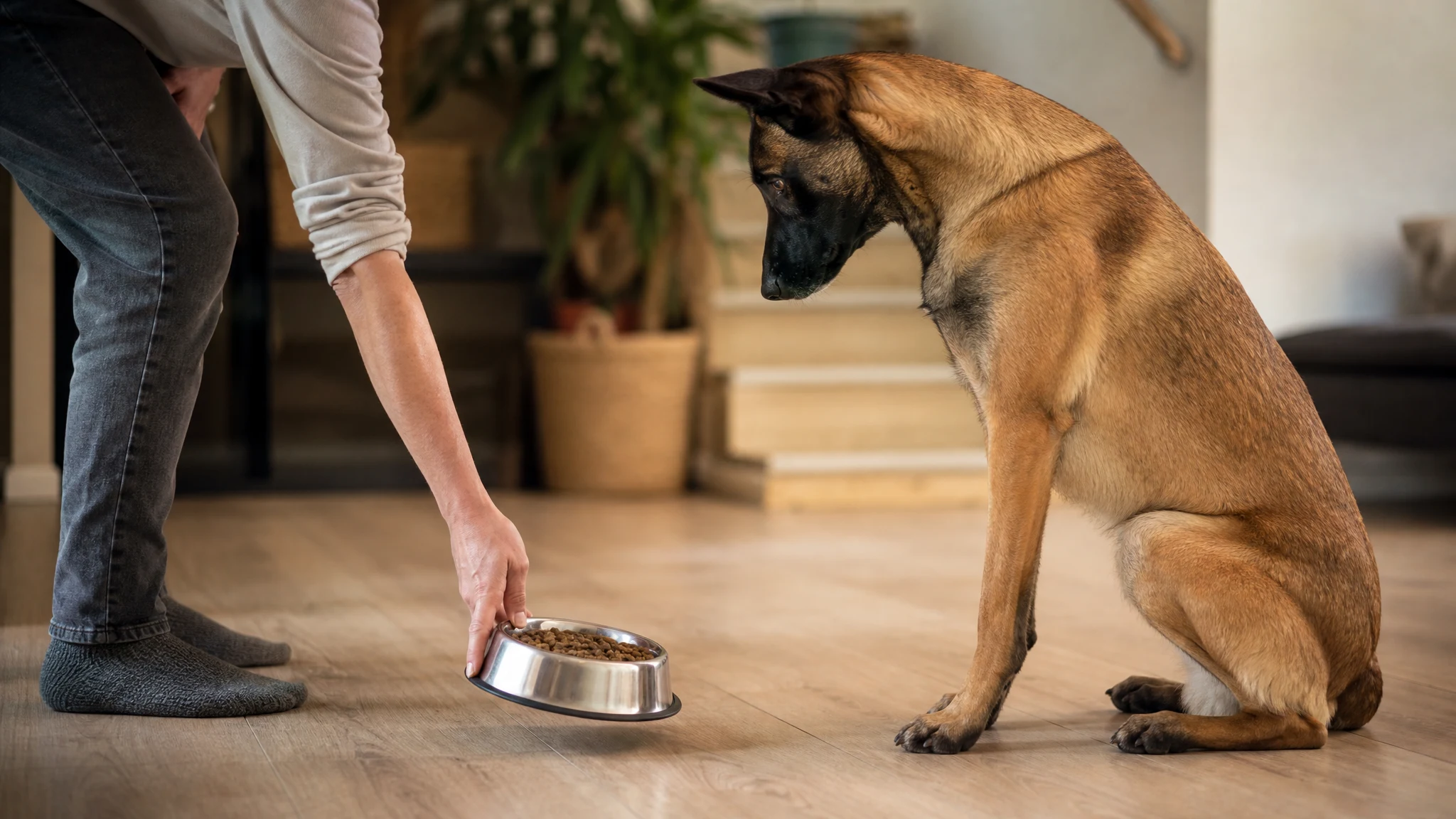
General nutrition information compiled from product labels and published sources, not veterinary advice. Your veterinarian is the right person to choose a diet for your dog, especially one with a health condition.
Good dog feeding preparation is mostly routine. You decide how much, how often and how to keep the food fresh, then repeat it every day. For a Belgian Malinois, a lean, athletic dog, that routine matters because both too much and too little food show up quickly in body condition.
This guide walks through the setup in order. It uses label guides and published breed information as starting points. Your veterinarian makes the final call for your individual dog.
What a Belgian Malinois needs to know first
The Hill's Pet breed page lists adult Belgian Malinois at roughly 40 to 80 pounds, with males usually heavier than females. It gives a life expectancy of 12 to 15 years. That is a wide weight range, so a label chart for one dog will not fit every Malinois.
Hill's also advises large-breed puppy food for the breed. It says hip and elbow dysplasia can be common in the breed and that risk can increase with weight gain. It also says the breed can be at risk for allergies with skin or gastrointestinal signs. None of this means a food will prevent or treat a condition. It means careful portioning is worth the effort.
Materials you need
- A complete and balanced food that matches your dog's life stage (puppy, adult or senior).
- A standard dry measuring cup, or a kitchen scale if you prefer weighing.
- An airtight food container, or the original bag kept inside a larger bin.
- A notebook or phone note to record weight, portions and treats.
- A bathroom or pet scale for regular weigh-ins.
- Two clean bowls, one for food and one for fresh water.
Step 1: Pick a food that matches the life stage
Check the AAFCO statement on the bag or on the brand's own page. For a growing Malinois puppy, look for wording such as "including growth of large size dogs (70 lb or more as an adult)." Whole Dog Journal explains that growth and all-life-stages foods carry either that phrase or "except for growth of large size dogs," depending on whether they meet the large-dog nutrient levels.
Many adult Malinois weigh under 70 pounds, so do not read that phrase as a size rule for your dog. Read it as a sign the food was formulated with large-breed growth in mind.
For examples of how labels differ, see our label-by-label comparison of foods for Belgian Malinois. We compared label data only. We did not run feeding trials or taste tests.
Step 2: Find your starting portion
Start with the feeding chart on your food's package or the brand's page. Charts use weight, and some also use age and activity level.
Here is how two brands present it:
- Royal Canin's Large Adult page gives a daily chart by weight and activity. Its example is a 62 pound dog with moderate activity, at 3 cups plus 4/8 cup per day. The page lists 360 kcal per cup, calculated as fed.
- Royal Canin's Large Puppy and Large Aging 8+ pages offer a feeding calculator for a tailored amount.
- Hill's Science Diet large-breed formulas tell owners to adjust amounts as needed to maintain optimal weight, and to ask a veterinarian if unsure.
Treat the chart number as a first guess. Calories per cup vary a lot between foods, so never copy a cup amount from one brand to another. Check the brand's page for the right figure.
A simple way to apply it
- Weigh your dog and note activity level honestly. A dog in daily sport or work training is different from one on two walks.
- Find the matching row on the chart and write down the daily total.
- Subtract room for treats (see Step 4).
- Split the rest into meals (see Step 5).
Step 3: Measure the same way every time
Scooping straight from the bag gives uneven portions. Level the cup, or weigh the food in grams if your scale allows. Once you know your dog's cup amount, weigh it once and note the grams so you can check your scoop.
If you prep ahead, portion into containers for a few days at a time. This is quick, and it stops a well-meaning family member from adding "a little extra."
Step 4: Count treats and extras
Hill's says excess weight adds strain on joints and advises keeping treats to 10 percent of daily calories. Training rewards count. If you use food rewards in a training session, take them out of the daily meal amount.
For growing puppies, Cornell University's Riney Canine Health Center advises against adding calcium or vitamin D supplements to a growing large-breed puppy. It also says to avoid overfeeding or rapid growth in puppies predisposed to hip dysplasia. Ask your veterinarian before adding any supplement at any age.
Step 5: Set the meal schedule
Cornell says large, deep-chested dogs are most at risk of bloat (gastric dilatation-volvulus) and suggests two or more meals a day, smaller kibble, limited activity after meals and no raised bowls. Cornell's page does not name the Malinois specifically, and breed-specific risk is not confirmed there. Still, the Malinois is a large dog, so these habits are a reasonable precaution.
A practical routine looks like this:
- Feed adults at least twice daily, at about the same times each day.
- Keep the hour after meals calm. Save hard play, ball work and training drills for before the meal or for later.
- Serve food at floor level in a regular bowl.
- Leave fresh water available.
Puppies usually need more meals than adults. Ask your veterinarian how many meals suit your puppy's age.
Step 6: Plan for life stage changes
Royal Canin's general guidance for large and giant breeds is that they mature between 15 months and two years. Its Large Puppy formula is labeled for puppies up to 15 months. Hill's large breed puppy food is labeled for large-breed puppies up to 18 months old. Your puppy's own switch date is a question for your veterinarian.
When you change foods, mix the new food gradually with the old over several days. Sudden changes can upset a dog's stomach, and the breed can be at risk for gastrointestinal signs, according to Hill's.
For senior dogs, Royal Canin lists its Large Aging 8+ formula for large dogs over 8 years. It lists 308 kcal per cup on its page, which is lower than its adult formula. Because calories per cup differ, recalculate portions when you switch.
Step 7: Store the food properly
Storage rules differ by product, so follow the package directions and any "best by" date. A few general habits help:
- Dry food: keep it sealed, in a cool, dry spot, away from sunlight. Keeping it in the original bag, which lists the lot number and date, is useful if you ever need to check a product notice.
- Canned food: check the can label for how to store an opened can. Hill's Adult Chicken & Barley Entree is listed per 13 oz can (369 kcal per can), so portion by the can, not the cup.
- Fresh food: Freshpet's page says to refrigerate its roll and use it within 7 days of opening. Slice the amount shown on the package serving marks.
- Wash food bowls and scoops regularly.
Step 8: Check body condition and adjust
Weigh your dog on a schedule, such as every two to four weeks, and write it down. Feel along the ribs. You should be able to feel them without pressing hard, and you should see a waist from above. If your dog is gaining or losing, adjust the daily amount in small steps and recheck. Hill's advises adjusting amounts as necessary to maintain optimal weight.
Common mistakes to avoid
- Feeding by eye instead of measuring.
- Forgetting that training treats and chews add calories.
- Using an adult chart for a puppy, or a puppy formula long after the label says it is meant for.
- Adding calcium or vitamin D to a growing puppy.
- Feeding one large meal, then running hard exercise right after.
- Switching foods overnight.
- Copying a cup amount from a friend's dog. Weight, age, activity and food all change the number.
What results to expect
With steady portions and a regular schedule, many owners find their dog's weight and body condition become easier to keep stable. Mealtimes may become more predictable, and it is easier to spot changes in appetite or stools sooner. Results vary by dog.
Food does not cure or prevent any disease. If your Malinois has a health condition, such as joint problems, allergies or digestive sensitivity, confirm amounts and food choice with your veterinarian first. Prescription diets are something only a veterinarian prescribes.
Sources
- Hill's Pet, Belgian Malinois breed page
- Cornell University Riney Canine Health Center, GDV (bloat)
- Cornell University Riney Canine Health Center, canine hip dysplasia
- Whole Dog Journal, In the Fine Print: Nutritional Adequacy Statements
- Royal Canin, Large Adult
- Royal Canin, Large Puppy
- Royal Canin, when to switch your puppy to an adult diet
- Hill's Science Diet, Adult Chicken & Barley Entree
- Freshpet, Vital Chicken Recipe