Belgian Malinois Health Issues: What the Diet Connection Is and Isn't
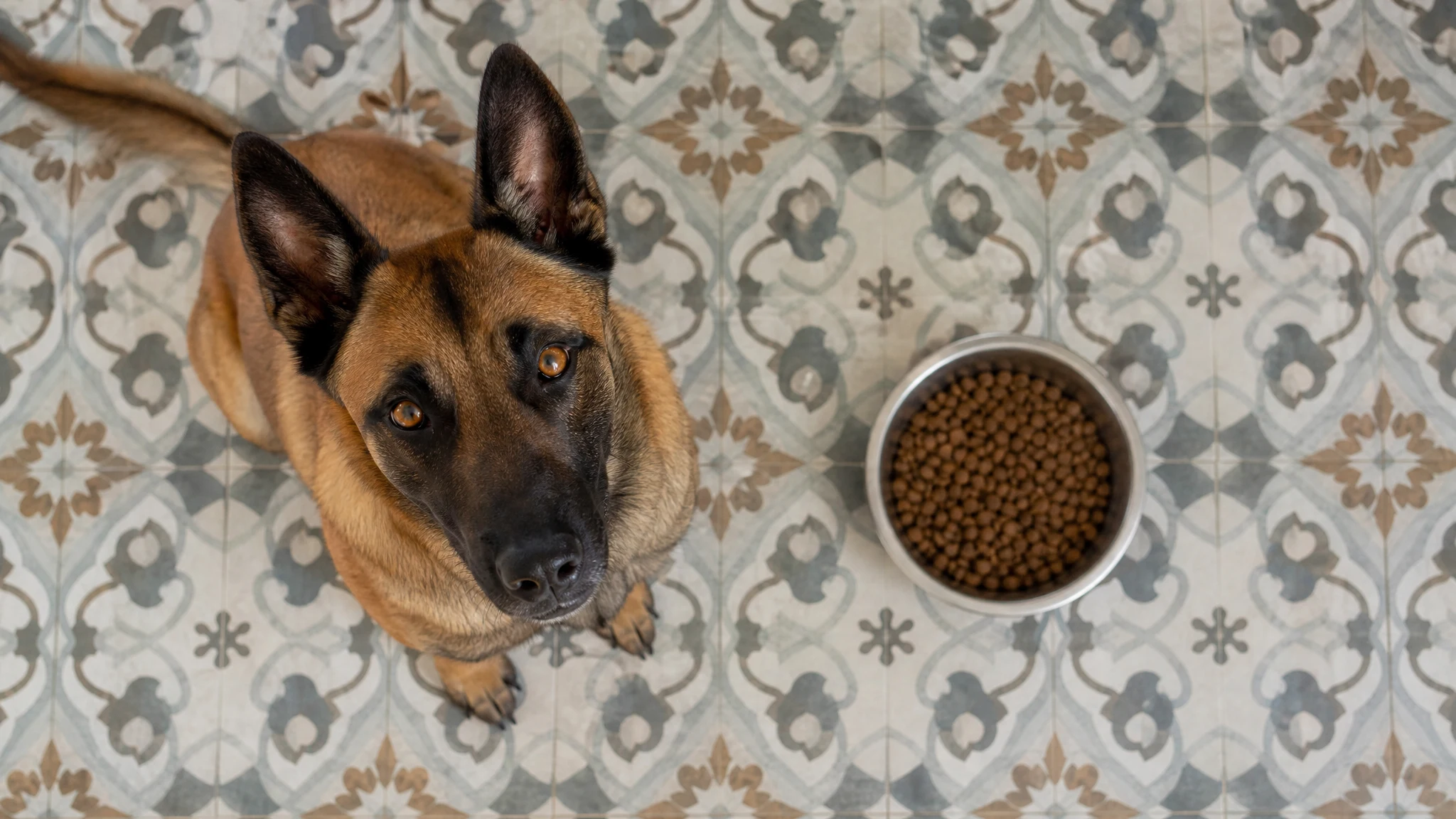
General nutrition information compiled from product labels and published sources, not veterinary advice. Your veterinarian is the right person to choose a diet for your dog, especially one with a health condition.
Food gets blamed for a lot of Belgian Malinois health issues, and it gets credit for a lot too. The honest picture is narrower. Diet can support healthy weight and steady growth. It does not prevent, treat or cure a medical condition.
This guide shows you how to separate the real diet links from the marketing. It is a label-reading routine you can repeat for any food.
What You Need Before You Start
- Your dog's current weight and age, ideally from your veterinarian's scale.
- The bag or can of the food you are considering, or the brand's own product page.
- A notebook or phone note to record the label details.
- A standard measuring cup and a kitchen scale for portions.
- Your veterinarian's contact details for the questions below.
The Breed Facts That Matter for Food
The American Belgian Malinois Club standard gives adult height as 24 to 26 inches for males and 22 to 24 inches for females. It does not give a weight. The Hill's Pet breed page lists 40 to 80 pounds, with males usually heavier than females, and a life expectancy of 12 to 15 years.
That weight range matters. Many adult Malinois sit under 70 pounds, so be careful with any label wording tied to 70 pounds. Treat the breed as a large dog for feeding purposes. Hill's advises large-breed puppy food for the breed.
Step 1: Know Which Health Issues Have a Diet Link
Not every concern has the same connection to food. Here is what the sources say.
Hip and elbow dysplasia
Hill's says hip and elbow dysplasia can be common in the breed, and that risk can increase with weight gain. Cornell University's Riney Canine Health Center advises feeding large-breed growing puppies a diet formulated for large breeds. It also advises avoiding overfeeding and rapid growth in puppies predisposed to hip dysplasia.
The diet link is about growth rate and body weight. No food fixes a joint that has formed abnormally.
Excess weight and joint strain
Hill's notes that extra weight adds strain on joints. It suggests keeping treats to 10 percent of daily calories. This is one of the few diet points you can act on right away.
Allergies and skin or stomach signs
Hill's says the breed can be at risk for allergies, with skin and/or gastrointestinal signs. Those signs have many possible causes. Food is only one of them. A veterinarian decides whether a food trial makes sense for an individual dog.
Bloat (GDV)
Cornell says large, deep-chested dogs are most at risk of gastric dilatation-volvulus. Its suggestions include two or more meals per day, smaller kibble, limited activity after meals and avoiding raised bowls. The Cornell page does not name the Malinois, and breed-specific risk for the Malinois is not confirmed there. Treat this as a large-dog precaution, and ask your veterinarian how it applies to your dog. Bloat is an emergency.
Grain-free foods and DCM
The FDA's Center for Veterinary Medicine has investigated a possible link between certain diets and canine dilated cardiomyopathy. Its latest update is dated December 23, 2022. The FDA says it does not plan further public updates until there is meaningful new scientific information. Read the FDA page yourself and talk with your veterinarian before choosing a diet on this question.
Step 2: Match the Food to the Life Stage
Check the AAFCO adequacy statement on the label. It says which life stage the food was made for.
Whole Dog Journal explains that growth and all-life-stages foods must say either "including growth of large size dogs (70 lb or more as an adult)" or "except for growth of large size dogs." Too much calcium can cause bone and joint abnormalities in large-breed puppies. That is why this wording matters for a growing Malinois.
For puppies, look for the statement that covers growth of large dogs. Royal Canin Large Puppy, Victor Hi-Pro Plus Large Breed Puppy, Orijen Original and Freshpet Vital Chicken Recipe all carry that wording in the label text we compared. The Hill's Science Diet Puppy Large Breed label instead states that AAFCO feeding tests substantiate complete and balanced nutrition for growing puppies, and the brand describes it for large breed puppies up to 18 months old.
For adults, a maintenance statement is the match. Royal Canin Large Adult and Hill's Science Diet Adult Large Breed both use one.
Step 3: Read the Label Data Side by Side
Write down the same details for each food: the AAFCO statement, the first five ingredients, protein, fat, fiber and calories per cup. Here is a sample from the brands' own pages.
| Food | Stage | First ingredients | Calories |
|---|---|---|---|
| Royal Canin Large Puppy | Growth, large | Chicken by-product meal, corn, wheat | 349 kcal ME per cup, as fed (calculated) |
| Hill's Science Diet Puppy Large Breed Chicken & Brown Rice | Growth, large | Chicken, brown rice, whole grain oats | 387 kcal per cup |
| Victor Hi-Pro Plus Large Breed Puppy | All life stages | Chicken, chicken meal, brown rice | 365 kcal per cup |
| Royal Canin Large Adult | Adult | Chicken by-product meal, brewers rice, wheat | 360 kcal ME per cup, as fed (calculated) |
| Hill's Science Diet Adult Large Breed Chicken & Barley | Adult | Chicken, cracked pearled barley, brown rice | 365 kcal per cup |
Be careful with protein and fat figures. Hill's lists dry matter averages, not guaranteed minimums. Other brands list guaranteed analysis on an as-fed basis. Those numbers are not directly comparable until you convert them to the same basis.
We compared label data only. We did not run feeding trials or taste tests, so nothing here says how a food performs in a real dog. For a fuller side-by-side, see our label comparison of dog foods for Belgian Malinois.
Step 4: Set a Starting Portion, Then Adjust
Use the brand's feeding guide as a starting point only. Royal Canin's Large Adult page, for example, gives an example of a 62 pound dog with moderate activity at 3 cups plus 4/8 cup per day. Hill's tells owners to adjust amounts to maintain optimal weight and to ask a veterinarian if unsure.
Split the daily amount into at least two meals. This follows Cornell's general advice for large, deep-chested dogs. A very active Malinois and a couch-bound one can need quite different amounts, so the chart is only the first guess.
Step 5: Track Body Condition Every Two Weeks
Weigh your dog on the same scale at the same time of day. Feel along the ribs and look at the waist from above. Your veterinarian can show you what a healthy body condition looks like. If weight creeps up, reduce the portion a little and recheck instead of changing foods repeatedly.
For puppies, steady growth matters more than fast growth. Cornell specifically warns against overfeeding in puppies predisposed to hip dysplasia.
Step 6: Change Foods Slowly and Take Questions to Your Vet
Mix the new food in with the old over several days. Watch stool, appetite, itching and energy. Bring notes to your appointment. If you suspect a food allergy, ask your veterinarian about the proper way to test it instead of rotating foods on your own.
Prescription diets exist for specific medical problems. Only a veterinarian can prescribe one.
Tips
- Count treats and training rewards toward the 10 percent limit Hill's suggests.
- Keep fresh water available at all times. Freshpet and other brands say the same on their pages.
- Check the brand's own page for kibble size. For the foods compared here, it was often not listed. Ask the brand if size matters for your dog.
- Compare foods by AAFCO statement and calories per cup before you look at the front of the bag.
Common Mistakes to Avoid
- Adding calcium or vitamin D to a puppy's food. Cornell advises against supplements for growing large-breed puppies.
- Feeding to the top of the chart. Feeding charts are starting points, not targets.
- Treating a breed-wide risk as a diagnosis. A risk factor does not mean your dog has the condition.
- Assuming a high protein number means a better food. The number means little without the basis it was measured on and your veterinarian's view of your dog.
- Using an all-breed food without checking the large-dog wording. Look for the puppy growth statement if your dog is still growing.
- Switching to grain-free on a hunch. Review the FDA's DCM page and talk to your veterinarian first.
What to Expect
A food that fits the life stage, with portions matched to body condition, may help your dog stay at a lean weight. A lean weight may reduce strain on the joints. It will not erase a genetic tendency, and it cannot treat hip dysplasia, allergies or heart disease.
Results vary from dog to dog. Your veterinarian is the one to decide what an individual dog needs.
Sources
- Hill's Pet, Belgian Malinois breed page
- American Belgian Malinois Club, Official Standard
- Cornell University Riney Canine Health Center, canine hip dysplasia
- Cornell University Riney Canine Health Center, gastric dilatation-volvulus (bloat)
- FDA Center for Veterinary Medicine, DCM investigation
- Whole Dog Journal, In the Fine Print: Nutritional Adequacy Statements
- Royal Canin, Large Puppy
- Royal Canin, Large Adult
- Hill's Science Diet, Puppy Large Breed
- Hill's Science Diet, Adult Large Breed
- Victor, Hi-Pro Plus Large Breed Puppy
- Freshpet, Vital Chicken Recipe with Peas, Carrots & Brown Rice