Dog Health Supplements: What the Label Should Show
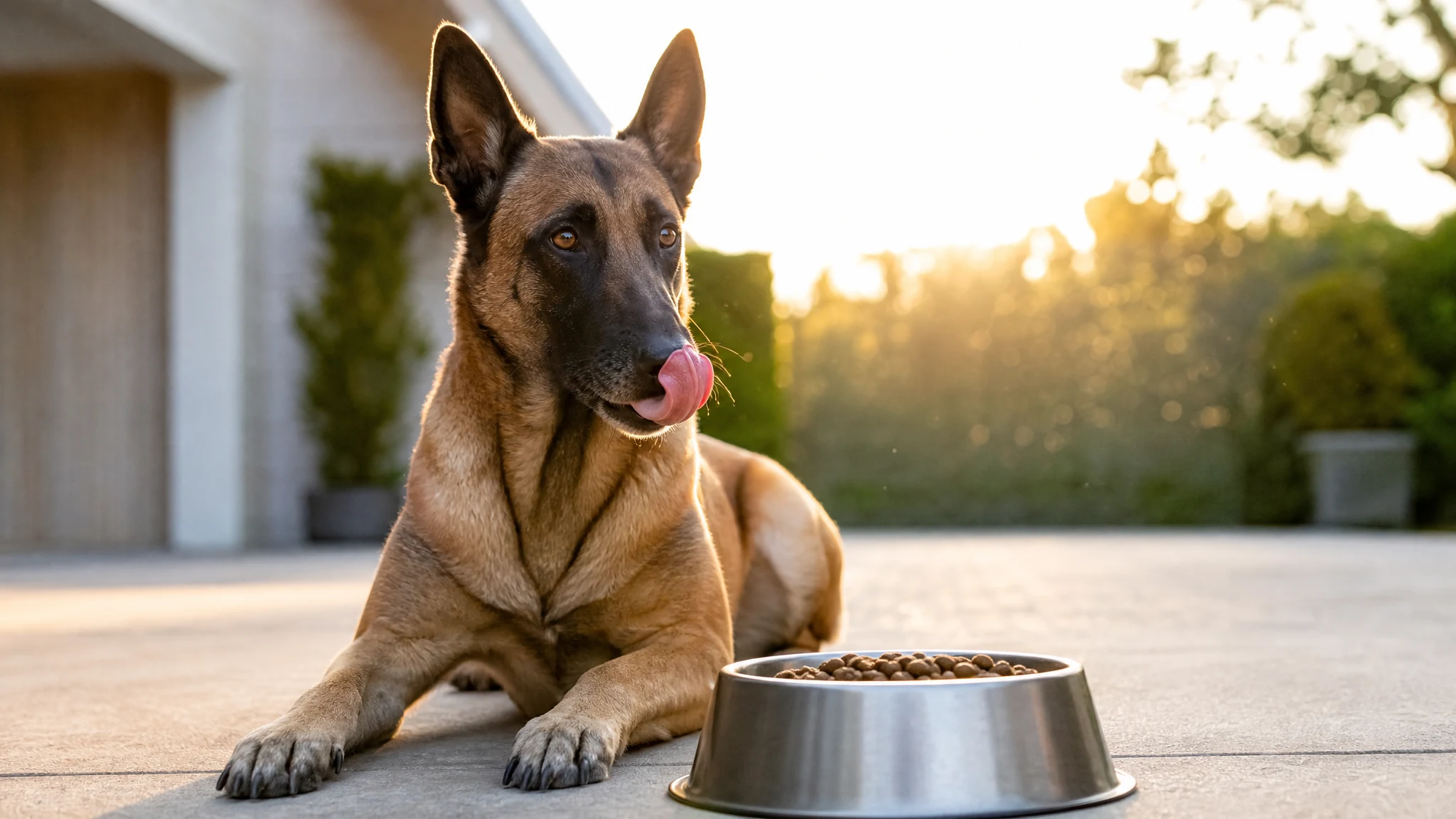
General nutrition information compiled from product labels and published sources, not veterinary advice. Your veterinarian is the right person to choose a diet for your dog, especially one with a health condition.
Walk down any pet aisle and you will find chews, powders and oils for joints, skin and digestion. Many are aimed at active, athletic breeds like the Belgian Malinois. The packaging is confident. The useful information is often small and easy to miss.
This guide shows you how to read the label on dog health supplements before you give one to your Malinois. It does not recommend a product, and it gives no doses. Its goal is to help you ask better questions and know when to call your veterinarian.
Why the Belgian Malinois Deserves a Careful Look
Hill's Pet, on its Belgian Malinois breed page, lists adult weight at 40 to 80 pounds, with males usually heavier than females. It gives a life expectancy of 12 to 15 years. The American Belgian Malinois Club standard describes males at 24 to 26 inches and females at 22 to 24 inches at the withers.
Hill's also says hip and elbow dysplasia can be common in the breed, and that risk can rise with weight gain. It notes the breed can be at risk for allergies with skin or stomach and intestinal signs. These are the exact areas where supplement marketing is loudest.
That does not mean a supplement is the answer. A label cannot tell you whether your individual dog needs anything extra. A veterinarian decides that.
What You Need Before You Start
- The supplement container or box, with the full label visible (not just the front panel).
- The label or bag of your dog's current food, including the nutritional adequacy statement.
- A list of everything your dog eats in a day: meals, treats, chews and toppers.
- Your dog's current weight and age.
- Any notes from your veterinarian about joints, skin, digestion or weight.
- A pen and paper, or a notes app, to record questions.
Step-by-Step: How to Read a Supplement Label
Step 1: Check the food first
Before you look at any supplement, look at the food. A complete and balanced dog food is designed to supply the nutrients a dog needs for its life stage. Many Malinois owners add products to a diet that may already cover the same ground.
Find the nutritional adequacy statement on the food. For example, one large breed puppy food from Royal Canin states it is formulated to meet AAFCO Dog Food Nutrient Profiles for growth, including growth of large size dogs (70 lb. or more as an adult). Hill's Science Diet Puppy Large Breed carries a different kind of statement: it says animal feeding tests using AAFCO procedures substantiate complete and balanced nutrition for growing puppies. Both are on the brands' own product pages. Your food will have its own wording.
If your food carries one of these statements, it is meant to be the foundation. A supplement is an add-on, not a replacement.
Step 2: Find out who the product is made for
Look for the species and life stage. A product made for adult dogs may not suit a growing puppy. A product made for people, or for horses, should not be used for your dog unless your veterinarian says so.
For growing puppies, be especially careful. Cornell University's Riney Canine Health Center advises feeding a diet formulated for large breeds to growing large-breed puppies. It also says not to add calcium or vitamin D supplements to a growing puppy. Whole Dog Journal adds that too much calcium can cause bone and joint abnormalities in large-breed puppies. If your Malinois is under about 18 months, talk to your veterinarian before adding anything. Hill's labels its large breed puppy food for puppies up to 18 months old, and Royal Canin's large-breed guidance puts maturity at 15 months to two years.
Step 3: Read the ingredient list, not the front panel
Front panels use words like "support," "mobility" and "healthy." The ingredient panel is where the facts are. Look for:
- Each active ingredient named individually, not hidden inside a "proprietary blend."
- The amount of each active ingredient per serving, in the units the label uses.
- Inactive ingredients such as flavorings, binders and sweeteners.
If a label lists a blend without the amount of each part, you cannot compare it with anything else. You also cannot tell your veterinarian what your dog is taking.
Step 4: Compare overlap with the food
Now put the supplement label next to the food label. Circle any nutrient that appears on both. Vitamins and minerals are the usual overlap. Doubling up is the mistake to watch for, especially with calcium and vitamin D in growing dogs, as Cornell notes.
Do not try to do the math yourself. Bring both labels to your veterinarian and ask whether the combination makes sense for your dog.
Step 5: Look for the serving information
A good label tells you the serving size and how it relates to dog weight. Use the label's directions as a starting point only. Your veterinarian may adjust them for your dog's age, weight and health. This article gives no amounts, because they depend on the product and the dog.
Step 6: Check how the claims are worded
Be skeptical of any label that says a product prevents, treats or cures a disease such as hip dysplasia, allergies, heart disease or bloat. No food or chew has been shown on this page's sources to do that. Cornell, for example, describes hip dysplasia management in terms of proper diet for growth, avoiding overfeeding and rapid growth, and veterinary care.
Softer language such as "may support" is common and not a promise. Treat it as marketing, not as evidence about your dog.
Step 7: Look for contact details and batch information
A trustworthy label gives the manufacturer's name and a way to reach the company. It also shows a lot number and an expiration date. If you cannot find these, that is a reason to pause. Call or email the brand and ask what quality checks it does. Ask for answers in writing if you can.
Step 8: Talk to your veterinarian before starting
Bring the supplement, the food label and your daily feeding notes. Ask:
- Does my dog have a reason to take this?
- Could it overlap with the food or with any medication?
- How will we judge whether it is doing anything?
- When should we stop?
Tips for Belgian Malinois Owners
- Start with weight. Hill's says excess weight adds strain on joints and suggests keeping treats to 10 percent of daily calories. Chews count as treats. Check the calories on a supplement chew.
- Change one thing at a time. If you add a supplement and a new food in the same week, you will not know which one caused a stomach upset or a skin change.
- Keep a simple log. Note the date you start, what you give and any changes in stool, coat, appetite or movement.
- Watch meal timing. Cornell says large, deep-chested dogs are most at risk of bloat (GDV) and suggests two or more meals a day, smaller kibble, limited activity after meals and no raised bowls. The page does not name the Malinois specifically, so ask your veterinarian how it applies to your dog. Powders mixed into a big single meal may not fit that advice.
- Use the food comparison first. If your main concern is the diet itself, our label-by-label comparison of foods for Belgian Malinois shows what several large-breed and all-life-stage foods say about their AAFCO statements, ingredients and calories. We compared label data only. We did not run feeding trials or taste tests.
Common Mistakes to Avoid
- Treating a supplement as a fix for a diagnosed problem. If your dog limps, scratches constantly or has loose stools, see a veterinarian. A supplement can delay that visit.
- Adding calcium or vitamin D to a growing puppy. Cornell specifically advises against it.
- Letting a puppy grow fast. Cornell also advises avoiding overfeeding and rapid growth in puppies predisposed to hip dysplasia. No chew makes up for that.
- Buying by the front of the package. The marketing claim and the ingredient panel can tell very different stories.
- Using human products. Ingredients and sweeteners in products made for people may not be safe for dogs. Ask first.
- Ignoring the grain-free debate without checking the source. The FDA's investigation into a possible link between certain diets and canine dilated cardiomyopathy (DCM) had its latest update on December 23, 2022. The FDA said it did not plan further public updates until there is meaningful new scientific information. Talk to your veterinarian about what that means for your dog's diet.
- Stacking several products. Each one makes the label math harder and the cause of any problem harder to find.
What Results Can You Reasonably Expect?
Honest expectations are modest. If your veterinarian recommends a supplement, it may help support a goal you have agreed on together, but results vary from dog to dog. Some dogs show no visible change. Changes in skin, coat or movement, if they happen, can take a while to notice and can have other causes, such as season, activity or weight.
What you can expect from the label-reading process itself is more reliable. You will know what your dog is taking. You will be able to spot overlap with the food. You will be better prepared for the veterinary conversation. A supplement is not a substitute for a complete diet, healthy weight, exercise and regular check-ups.
If your dog has diabetes, kidney disease, heart disease or another diagnosed condition, only a veterinarian can say what is appropriate. Prescription diets are something a veterinarian prescribes, not something to pick from a shelf.
A Quick Checklist
- The food is complete and balanced for my dog's life stage.
- The supplement is made for dogs, and for my dog's age.
- Every active ingredient is listed with an amount.
- I checked for overlap with the food.
- The label makes no claim to cure or prevent a disease.
- The brand lists contact details, a lot number and an expiration date.
- My veterinarian has seen the labels and agreed.
Sources
- Hill's Pet, Belgian Malinois breed page
- American Belgian Malinois Club, Official Standard
- Cornell University Riney Canine Health Center, canine hip dysplasia
- Cornell University Riney Canine Health Center, gastric dilatation volvulus (bloat)
- Whole Dog Journal, In the Fine Print: Nutritional Adequacy Statements
- FDA Center for Veterinary Medicine, DCM investigation page
- Royal Canin, Large Puppy product page
- Hill's Science Diet, Puppy Large Breed product page