Dog Nutrition for High-Energy Breeds Like the Belgian Malinois
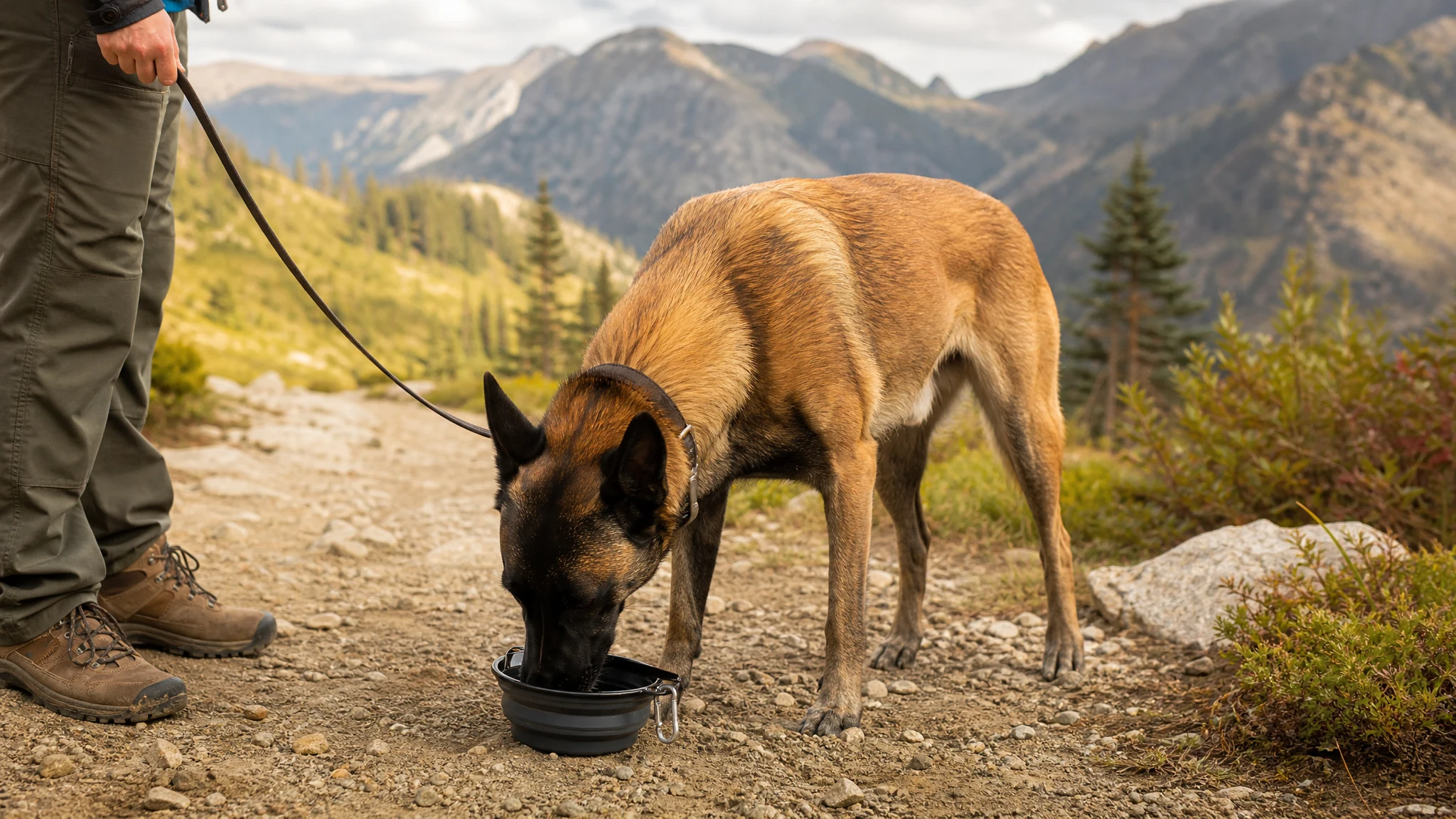
General nutrition information compiled from product labels and published sources, not veterinary advice. Your veterinarian is the right person to choose a diet for your dog, especially one with a health condition.
Good dog nutrition for a Belgian Malinois starts with the label, not the marketing. This guide walks through how to choose a food, set up meals, and adjust over time. It is a process you can repeat as your dog grows from puppy to senior.
One note on method. We compared label data from brand pages. We did not run feeding trials or taste tests, and we are not telling you one food is best for every dog.
What You Need Before You Start
- Your dog's age and current weight. The Hill's Pet breed page lists adult Belgian Malinois at 40 to 80 pounds, with males usually heavier than females.
- A kitchen scale or a dry measuring cup, so portions are consistent.
- The bag or can of any food you are considering, or its brand page, so you can read the AAFCO statement and ingredient list.
- Your veterinarian's contact details. They decide what is right for an individual dog.
- A simple notebook or phone note for weight, meals and treats.
Step 1: Know Your Dog's Size Category
Hill's Pet advises large-breed puppy food for this breed, which is why we treat the Malinois as a large dog for feeding purposes. The American Belgian Malinois Club standard gives heights of 24 to 26 inches for males and 22 to 24 inches for females at the withers. It gives no weight.
Many adult Malinois weigh under 70 pounds. That matters later, because the AAFCO wording on labels uses a 70 pound adult weight as its cutoff for large-size dogs. Do not assume your dog sits neatly on either side of that line. Ask your veterinarian.
Step 2: Match the Food to the Life Stage
Check the AAFCO nutritional adequacy statement on the label. It tells you which life stage the food is formulated for.
According to Whole Dog Journal's explanation of nutritional adequacy statements, growth and all-life-stages foods must say either "including growth of large size dogs (70 lb or more as an adult)" or "except for growth of large size dogs." The same article notes that too much calcium can cause bone and joint abnormalities in large-breed puppies. For a Malinois puppy, look for the "including growth of large size dogs" wording or a large-breed puppy formula.
Cornell's Riney Canine Health Center adds two points for growing large breeds. Feed a diet formulated for large breeds, and do not add calcium or vitamin D supplements to a growing puppy. Cornell also advises avoiding overfeeding and rapid growth in puppies predisposed to hip dysplasia.
When does a puppy become an adult? Royal Canin's general guidance says large and giant breeds mature between 15 months and two years. Hill's labels its large-breed puppy food for puppies up to 18 months old. That guidance is not specific to Malinois, so ask your veterinarian when to switch.
Step 3: Read the Label Data
Compare ingredient lists, the AAFCO statement, and calories per cup. The table below shows label data from each brand's own page for several large-breed formulas. No brand we found makes a Belgian Malinois specific formula.
| Food | Stage | First ingredients listed | Calories |
|---|---|---|---|
| Royal Canin Large Puppy Dry | Growth, including large size dogs | Chicken by-product meal, corn, wheat, chicken fat, wheat gluten | 349 kcal ME per cup (calculated) |
| Hill's Science Diet Puppy Large Breed Chicken & Brown Rice | Growth, large breed puppies | Chicken, brown rice, whole grain oats, chicken meal, cracked pearled barley | 387 kcal per cup |
| Victor Hi-Pro Plus Large Breed Puppy | All life stages, including large size dogs | Chicken, chicken meal, brown rice, whole grain millet, whole grain sorghum | 365 kcal per cup |
| Royal Canin Large Adult Dry | Adult maintenance | Chicken by-product meal, brewers rice, wheat, brown rice, chicken fat | 360 kcal ME per cup (calculated) |
| Hill's Science Diet Adult Large Breed Chicken & Barley | Adult maintenance | Chicken, cracked pearled barley, brown rice, brewers rice, whole grain wheat | 365 kcal per cup |
Be careful with protein and fat numbers. Royal Canin and Victor publish guaranteed analysis values. Hill's lists average nutrient content on a dry matter basis, which is not the same thing as a guaranteed minimum. Putting those numbers side by side can mislead you.
Brand pages also differ on kibble size. Victor describes an appropriate size for large breeds without giving a measurement, and the other pages we read did not state one. Check with the brand if kibble size matters to you.
For a fuller side-by-side, see our label comparison of foods for the Belgian Malinois.
Step 4: Start With the Label Feeding Guide
Treat the feeding chart as a starting point. Royal Canin's Large Adult page, for example, gives a chart by weight and activity. Its example is a 62 pound dog with moderate activity at 3 cups plus 4/8 cup per day. Your dog may need more or less.
Hill's tells owners to adjust amounts as necessary to maintain optimal weight, and to ask a veterinarian if unsure. A working or sport Malinois may burn more than a pet on the same chart, but the label cannot tell you how much more. Use your dog's body condition and your vet's input.
Step 5: Split the Day Into Meals
Cornell's Riney Canine Health Center says large, deep-chested dogs are most at risk of bloat, also called GDV. Its suggestions include two or more meals per day, smaller kibble, limited activity after meals and no raised bowls.
Cornell's page does not name the Malinois, and we could not confirm a breed-specific risk figure. Still, it is reasonable to ask your veterinarian whether these habits suit your dog.
Step 6: Count the Treats
Training a high-energy dog means a lot of treats. The Hill's Pet breed page says excess weight adds strain on joints and recommends keeping treats to 10 percent of daily calories. Hill's also says hip and elbow dysplasia can be common in the breed, and that risk can increase with weight gain.
Practical ways to stay under that mark:
- Use part of the daily kibble ration as training rewards.
- Break treats into small pieces.
- Write down extras so they are counted.
Reward-based training works well with food rewards, in line with the American Veterinary Society of Animal Behavior position. It just needs the math done.
Step 7: Track Weight and Adjust Slowly
Weigh your dog on a regular schedule and note body condition. If weight drifts, change portions in small steps and recheck. Large-breed puppies should not grow as fast as possible, so ask your vet to look at the growth pattern.
When changing foods, mix the new food in gradually over several days. Watch stools, appetite and skin.
Tips
- Hill's says the breed can be at risk for allergies with skin or gastrointestinal signs. If you see those, talk to your veterinarian rather than switching foods repeatedly. Only a veterinarian prescribes therapeutic or prescription diets.
- Fresh and wet foods exist too. The Freshpet Vital Chicken recipe states it is formulated for all life stages including large size dogs, and it is refrigerated and used within 7 days of opening. Hill's Adult Chicken & Barley canned food is for adult dogs, not puppies. Compare calories per can, not per cup.
- Senior dogs have different needs. Hill's gives a life expectancy of 12 to 15 years. Royal Canin makes a Large Aging 8+ formula at 308 kcal ME per cup (calculated), which is lower than its adult formula. Ask your vet when to move.
Common Mistakes
- Adding calcium or vitamin D to a puppy's food. Cornell advises against it for growing large breeds.
- Feeding a food that says "except for growth of large size dogs" to a puppy. Check the AAFCO wording.
- Comparing protein numbers across different bases. Dry matter averages and guaranteed minimums are different measurements.
- Treating the chart as a rule. Charts are starting points.
- Heavy exercise right after a meal. Cornell suggests limiting activity after meals for deep-chested dogs.
- Choosing by a grain-free label alone. The FDA's Center for Veterinary Medicine has investigated a possible link between certain diets and canine dilated cardiomyopathy (DCM). Its latest update is dated December 23, 2022, and it does not plan more public updates until there is meaningful new scientific information. Ask your veterinarian about the diet you are considering.
What to Expect
A complete and balanced food that suits your dog, fed in measured portions, may help support steady growth, a healthy body weight and consistent energy for training. Results vary by dog. No food prevents, treats or cures hip dysplasia, allergies, bloat or heart disease, and none is a guarantee.
If your dog's weight, stool or skin changes, or your dog seems low on energy, check in with your veterinarian. They can decide whether a diet change or a medical workup is the right next step.
Sources
- Hill's Pet, Belgian Malinois breed page
- American Belgian Malinois Club, Official Standard
- Cornell University Riney Canine Health Center, GDV (bloat)
- Cornell University Riney Canine Health Center, canine hip dysplasia
- Whole Dog Journal, In the Fine Print: Nutritional Adequacy Statements
- FDA Center for Veterinary Medicine, DCM investigation
- Royal Canin, when to switch your puppy to an adult diet
- Royal Canin Large Puppy, Large Adult and Large Aging 8+
- Hill's Science Diet Puppy Large Breed, Adult Large Breed and Adult Chicken & Barley canned
- Victor Hi-Pro Plus Large Breed Puppy
- Freshpet Vital Chicken Recipe