Dog Probiotics for Gut Health: What the Label Should Show
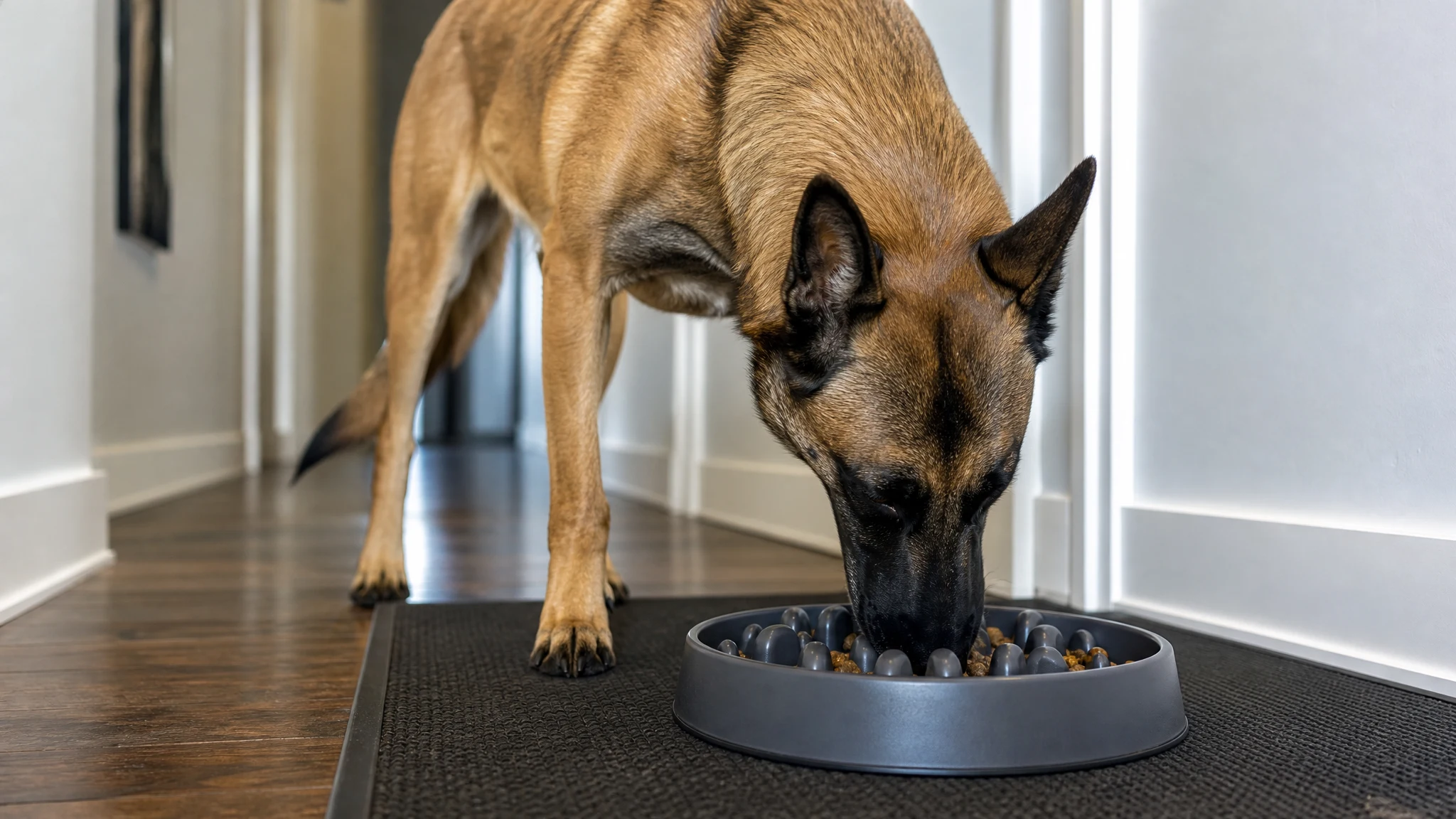
General nutrition information compiled from product labels and published sources, not veterinary advice. Your veterinarian is the right person to choose a diet for your dog, especially one with a health condition.
Probiotic products for dogs come as powders, chews, capsules and pastes. The marketing is loud and the labels are often thin. If you share your home with a Belgian Malinois, you may be weighing dog probiotics for gut health after a loose stool, a food change or a stressful week.
This guide does not rank products. It shows you how to read a probiotic label step by step, so you can ask better questions of the brand and of your veterinarian.
Start with what we can and cannot say
Nothing here claims a probiotic prevents, treats or cures any condition. Digestive trouble in a dog can have many causes, and a veterinarian decides what is right for an individual dog.
The label data we compared for our Belgian Malinois food comparison covers AAFCO statements, ingredients, calories and nutrient averages. It does not include probiotic strains or counts for those foods. We compared labels only. We did not run feeding trials or taste tests. For any probiotic claim on a food or supplement, check the brand's own page or ask the company.
Why gut health is a fair question for this breed
The Hill's Pet breed page says the Belgian Malinois can be at risk for allergies, with skin and/or gastrointestinal signs. That is a reason to talk with your veterinarian about digestive changes. It is not a reason to start a supplement on your own.
Hill's lists adult weight at 40 to 80 pounds, with males usually heavier than females. The breed is large and athletic, so a sensitive stomach can be tied to food, treats, stress or something eaten on a walk. A probiotic label cannot sort those causes out for you.
Materials you need
- The probiotic product's package or its full brand page, including the small print
- The label of your dog's current food, including the AAFCO statement and ingredient list
- A notebook or phone note for stool, appetite and energy observations
- A list of every treat, chew and supplement your dog gets now
- Your veterinarian's contact details
Step-by-step: how to read a probiotic label
Step 1: Confirm the product is made for dogs
Look for a clear statement that the product is intended for dogs. Human products can include ingredients or sweeteners that are not suited to dogs. If the label does not name the species, set it aside.
Step 2: Look for named strains, not just "probiotic blend"
A useful label usually names each organism by genus, species and strain. A vague phrase such as "proprietary probiotic blend" tells you little. If the strains are not listed, ask the brand to share them before you buy.
Step 3: Check how the count is stated
Counts are typically given in colony forming units, or CFU. Notice whether the number is stated at the time of manufacture or through the end of shelf life. The second is more informative. We do not set a target number here, because the right amount is a question for your veterinarian and the brand.
Step 4: Read the expiration date and storage directions
Live organisms can decline with heat, moisture and time. Check for a best-by date and storage instructions, such as keep cool or refrigerate after opening. Avoid products with no date at all.
Step 5: Read the rest of the ingredient list
Chews and powders often carry flavorings, binders and fillers. Compare these with what your dog already tolerates. Hill's notes that the breed can be at risk for allergies, so a new flavor such as chicken or beef is worth noting before you add it.
Step 6: Count the calories
Chews and pastes add calories. Hill's says excess weight adds strain on joints and advises keeping treats to 10 percent of daily calories. The same discipline applies to calorie-bearing supplements. Ask the brand for the calories per serving if the label omits them.
Step 7: Find the manufacturer's contact details and lot number
A real company lists a way to reach it and prints a lot number. If you cannot find either, you cannot ask questions or follow up on a problem.
Step 8: Check your dog's main food
A complete diet should carry an AAFCO statement. For growing dogs, Whole Dog Journal explains that growth and all-life-stages foods must say either "including growth of large size dogs (70 lb or more as an adult)" or "except for growth of large size dogs." Many adult Malinois weigh under 70 pounds, so the statement matters most for puppies.
Do not use a supplement to patch a food that does not fit your dog's life stage. If you are comparing foods, our label comparison for the breed shows the AAFCO statements side by side.
Step 9: Talk to your veterinarian before starting
Bring your notes and the label. Ask whether a probiotic makes sense for your dog, which product fits and how long to try it. Ask this especially if your dog has ongoing diarrhea, vomiting, blood in the stool, weight loss or a poor appetite. Those signs call for an exam, not a trial supplement.
If your Malinois is a puppy, Cornell's Riney Canine Health Center advises feeding a diet formulated for large breeds and not adding calcium or vitamin D supplements to a growing puppy. Ask before adding anything else, including a probiotic product that contains extra minerals.
Step 10: Introduce it on its own and keep a log
If your veterinarian agrees, start one new product at a time. Follow the label or your veterinarian's directions for amounts. Write down stool quality, appetite, gas and energy each day. That record helps your veterinarian judge whether the product is doing anything.
Tips
- Change one thing at a time. If you switch food and add a probiotic the same week, you will not know which one made a difference.
- Keep treats modest. Hill's suggests no more than 10 percent of daily calories from treats.
- Use a lot number and photos. Photograph the label and keep it with your log.
- Mind meal habits. Cornell says large, deep-chested dogs are most at risk of bloat (GDV) and suggests two or more meals a day, smaller kibble, limited activity after meals and no raised bowls. Cornell's page does not name the Malinois, and breed-specific risk is not confirmed there. A probiotic is not a substitute for these habits, and sudden swelling of the belly or unproductive retching is an emergency.
Common mistakes to avoid
- Treating a probiotic as a fix for illness. Persistent digestive signs need a veterinary exam.
- Assuming a food with "probiotics" on the bag is enough. Check whether the bag names strains and counts through shelf life. If it does not, ask the brand.
- Buying on strong wording. Phrases such as "clinically proven" mean little unless the brand points to the actual study.
- Doubling up. Combining several supplements can add calories and overlapping ingredients. Tell your veterinarian about everything your dog takes.
- Using human products by default. Check species labeling and any added sweeteners first.
- Ignoring the main diet. The FDA's DCM investigation page says its latest update was December 23, 2022, and that the agency does not plan further public updates until there is meaningful new scientific information. Diet questions of that kind belong with your veterinarian, not in a supplement aisle.
What results to expect
Results vary by dog. Some owners notice firmer stools or less gas over a few weeks, and others notice no change. A probiotic may support digestive comfort for some dogs, but it is not shown here to prevent or treat any disease.
If you see no change, or signs get worse, stop and call your veterinarian. Do not extend a trial just because the package suggests a longer course.
Quick label checklist
| Label item | What to look for |
|---|---|
| Intended species | Clearly says dogs |
| Strains | Genus, species and strain named |
| Count | CFU stated, ideally through end of shelf life |
| Dates and storage | Best-by date and storage directions |
| Other ingredients | Flavors and fillers your dog tolerates |
| Calories | Listed per serving, counted within treat limits |
| Company | Contact details and a lot number |
The short version
Read the label slowly, ask the brand for what is missing and bring your notes to your veterinarian. For a Belgian Malinois with a sensitive stomach, the main diet and the vet visit matter more than any one supplement.