Human Foods Belgian Malinois Should Never Eat
General nutrition information compiled from product labels and published sources, not veterinary advice. Your veterinarian is the right person to choose a diet for your dog, especially one with a health condition.
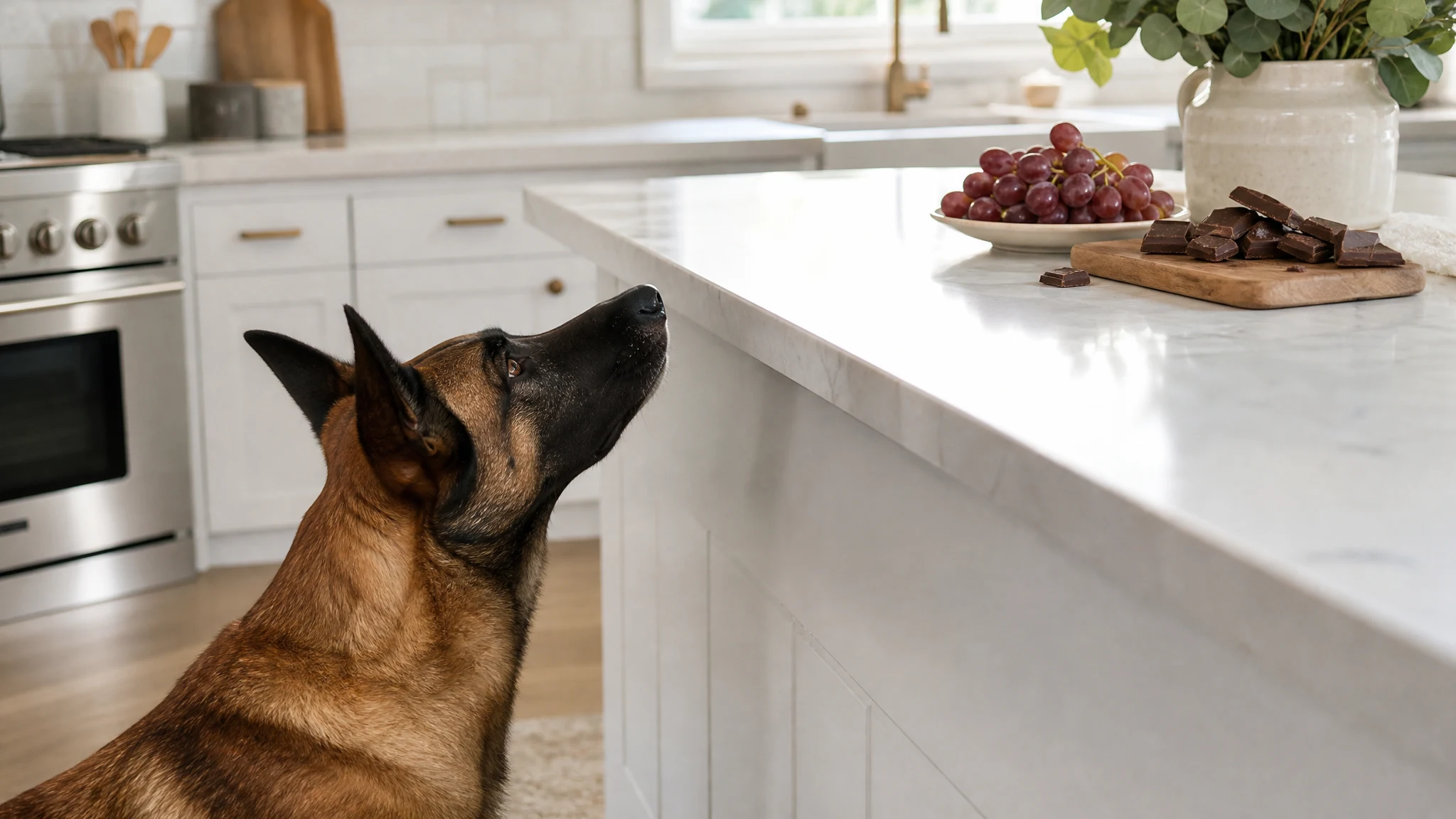
Many human foods dogs can't eat look harmless on a plate. A Belgian Malinois is quick, clever and food-motivated, so a dropped grape or an open counter can become a problem in seconds. These answers follow the toxic-food list from the ASPCA Animal Poison Control Center, plus what the Hill's Pet breed page and Cornell University's Riney Canine Health Center say about diet in large dogs.
This page gives no doses and no diagnoses. Your veterinarian decides what is right for your individual dog.
The Basics
What can Belgian Malinois not eat?
The ASPCA's list of foods to keep from dogs includes chocolate, grapes and raisins, xylitol, onions and garlic, macadamia nuts, alcohol, caffeine and raw yeast dough. It also warns about fat trimmings, cooked bones and very salty snacks. The sections below take these one at a time.
Can Belgian Malinois eat table scraps?
It is better not to make scraps a habit. Leftovers often hide onion, garlic, heavy seasoning, fat or sweeteners that are harmless to you and risky for a dog. A complete and balanced dog food should supply the meal, and treats stay on the side.
Does the breed's size change which foods are risky?
The Hill's Pet breed page lists adult weight at 40 to 80 pounds. Size matters for how a poison affects a dog, but the ASPCA list does not carve out safe exceptions for big dogs. Treat every item on it as off limits, whatever your dog weighs.
Toxic Foods on the ASPCA List
Why is chocolate dangerous for a Belgian Malinois?
The ASPCA names chocolate as toxic to dogs because it contains compounds called methylxanthines, theobromine and caffeine among them. Dark chocolate and baking chocolate are generally the more concerning kinds. Call for advice even if you are not sure how much was eaten.
Can Belgian Malinois eat grapes or raisins?
No. The ASPCA lists grapes and raisins as toxic and links them to kidney failure in dogs. The cause is not fully understood, so no amount is considered a safe test. That includes raisins baked into bread, cookies or trail mix.
What is xylitol and where does it hide?
Xylitol is a sugar substitute, and the ASPCA warns that it can cause a dangerous drop in blood sugar and liver problems in dogs. It turns up in sugar-free gum, mints, some baked goods and some nut butters. Read the ingredient label on anything you share, because it is easy to miss.
Are onions and garlic really a problem?
Yes. The ASPCA says onions, garlic, chives and leeks can damage a dog's red blood cells. Cooked, raw and powdered forms all count, so seasoned meats, soups and gravies are included.
Can Belgian Malinois eat macadamia nuts?
No. The ASPCA lists macadamia nuts as toxic, with signs such as weakness, vomiting and tremors. Cookies and candy that contain them are just as risky as the plain nuts.
What about alcohol?
Alcohol is on the ASPCA list and affects dogs more strongly than people. Watch for unattended drinks, and for foods made with alcohol such as some desserts and unbaked dough. Never offer a dog a sip.
Are coffee, tea and energy drinks off limits?
Yes. The ASPCA includes caffeine on its list, and that covers coffee grounds, tea bags and energy products. Keep used grounds and bags in a closed bin, since dogs with a strong nose will find them.
Why is raw yeast dough a risk?
The ASPCA warns that raw dough can expand in the stomach and produce alcohol as it ferments. Let bread rise somewhere a determined dog cannot reach. Baked bread is a different matter, though it adds calories without much benefit.
Are cooked bones and fat trimmings safe?
The ASPCA advises against both. Cooked bones can splinter, and fatty trimmings can upset the stomach. Ask your veterinarian before you offer any bone or chew.
Gray Areas Owners Ask About
Can Belgian Malinois eat peanut butter?
Plain peanut butter is a common treat, but check the label first. If xylitol appears in the ingredients, do not feed it. Use small amounts, since peanut butter is dense in calories.
Is milk or cheese okay?
The ASPCA lists milk and dairy as foods that can upset a dog's digestion, because many dogs cannot break down lactose well. Some dogs handle a small bite of plain cheese, and others get loose stools. Skip dairy if your dog has had stomach trouble.
What about salty or heavily seasoned food?
The ASPCA cautions against salty snacks such as chips and pretzels. Heavily seasoned leftovers often contain onion or garlic as well. Plain is safer than flavored.
Safer Snacks
What can Belgian Malinois eat as a snack?
Many owners offer small pieces of plain carrot, green beans, blueberries or apple with the core and seeds removed. Plain cooked chicken without skin or seasoning is another common choice. Introduce one new item at a time, and ask your veterinarian whether it suits your dog.
How many treats are too many?
The Hill's Pet breed page advises keeping treats to 10 percent of daily calories. That includes training rewards and anything shared from your plate. Count them as part of the day's food, not on top of it.
Are snacks different for a growing puppy?
Cornell's Riney Canine Health Center advises feeding a diet formulated for large breeds to growing large-breed dogs, and not adding calcium or vitamin D supplements to a growing puppy. Treats should not replace that diet. Our label comparison of dog foods for Belgian Malinois shows which products state large-size growth on the label.
Weight, Joints and Digestion
Can extra human food affect a Malinois's joints?
The Hill's Pet breed page says hip and elbow dysplasia can be common in the breed and that risk can increase with weight gain. Extra scraps add calories quickly. Keeping your dog lean is one thing within your control, and your veterinarian can tell you what a healthy body condition looks like.
Does feeding time matter for bloat?
Cornell says large, deep-chested dogs are most at risk of gastric dilatation-volvulus, or bloat. Its suggestions include two or more meals per day, smaller kibble, limited activity after meals and no raised bowls. Cornell's page does not name the Malinois, and breed-specific risk is not confirmed, so ask your veterinarian about your own dog.
What if my dog seems sensitive to certain foods?
The Hill's Pet breed page says the breed can be at risk for allergies, with skin or digestive signs. Do not guess at the cause by changing many foods at once. A veterinarian can plan any food trial, and prescription diets are only something a veterinarian prescribes.
If Your Dog Eats Something Toxic
What should I do right away?
Call your veterinarian or an emergency clinic, or contact ASPCA Animal Poison Control. Check the ASPCA's website for its current phone number and any fee before you need it, and keep that number saved. Do not wait for signs to appear.
Should I make my dog vomit?
Only if a veterinarian or poison control specialist tells you to. Some substances cause more harm coming back up, and home remedies can make things worse. Follow the professional's instructions for your dog.
What information should I have ready?
Know what your dog ate, roughly when, and how much. Have your dog's weight and the product packaging on hand. This lets the professional advise you faster.
For a food that meets your dog's needs every day, see our comparison of dog foods for Belgian Malinois. We compared label data only and ran no feeding trials or taste tests.
Sources
- ASPCA Animal Poison Control Center, list of toxic people foods (see the ASPCA website for the current version)
- Hill's Pet, Belgian Malinois breed page
- Cornell University Riney Canine Health Center, Gastric Dilatation-Volvulus (Bloat)
- Cornell University Riney Canine Health Center, Canine Hip Dysplasia